
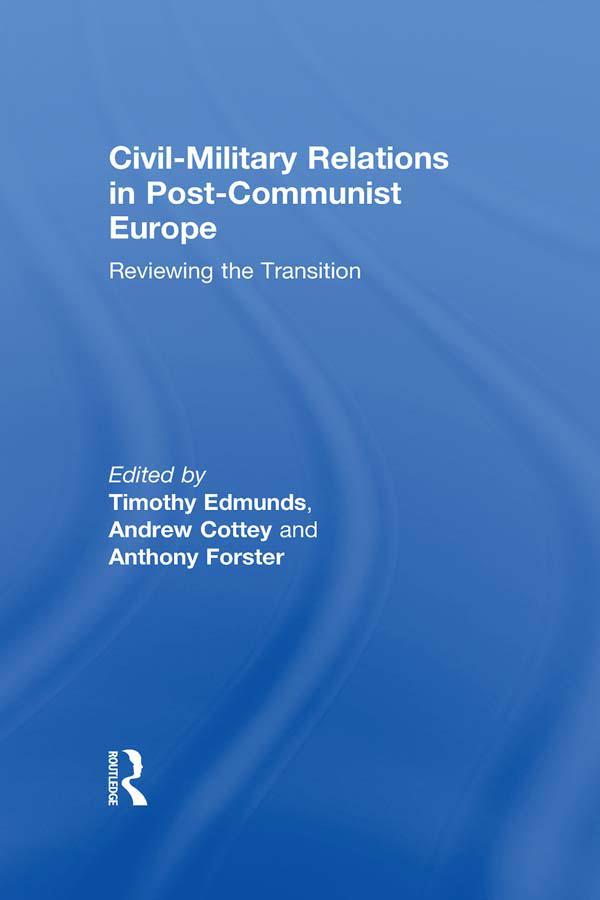
Fifteen years after the fall of communism, we are able to appraise the results of the multi-faceted postcommunist transition in Central and Eastern Europe with authority. This volume specifically addresses the fascinating area of Civil-Military relations throughout this transitional period.
The countries of the region inherited a onerous legacy in this area: their armed forces were part of the communist party-state system and most were oriented towards Cold War missions; they were large in size and supported by high levels of defence spending; and they were based on universal male conscription. Central and eastern European states have thus faced a three fold civil-military reform challenge: establishing democratic and civilian control over their armed forces; implementing organisational reform to meet the security and foreign policy demands of the new era; and redefining military bases for legitimacy in society.
This volume assesses the experiences of Poland, Hungary, Latvia, Romania, Croatia, Serbia-Montenegro, Ukraine and Russia in these areas. Collectively these countries illustrate the way in which the interaction of broadly similar postcommunist challenges and distinct national contexts have combined to produce a wide variety of different patterns of civil-military relations.
This book was previously published as a special issue of European Security.
Betal nemt med kort, Klarna, Apple Pay eller Google Pay. Ikke tilfreds? Du har altid 14 dages fortrydelsesret. Læs mere i vores vilkår. Har du spørgsmål, så send os en mail på hello@memmo.org.
Memmo gør det nemmere at studere – uanset hvor du er i verden. Hos os samler du dine kursusbøger og smarte studieværktøjer ét sted: resuméer, quizzer, podcasts og flashcards. Og så er der Ted, din studieven, der svarer på alt, du undrer dig over. Over 50 000 studerende studerer allerede her – bygget til at hjælpe dig med at lære hurtigere og stresse mindre.