
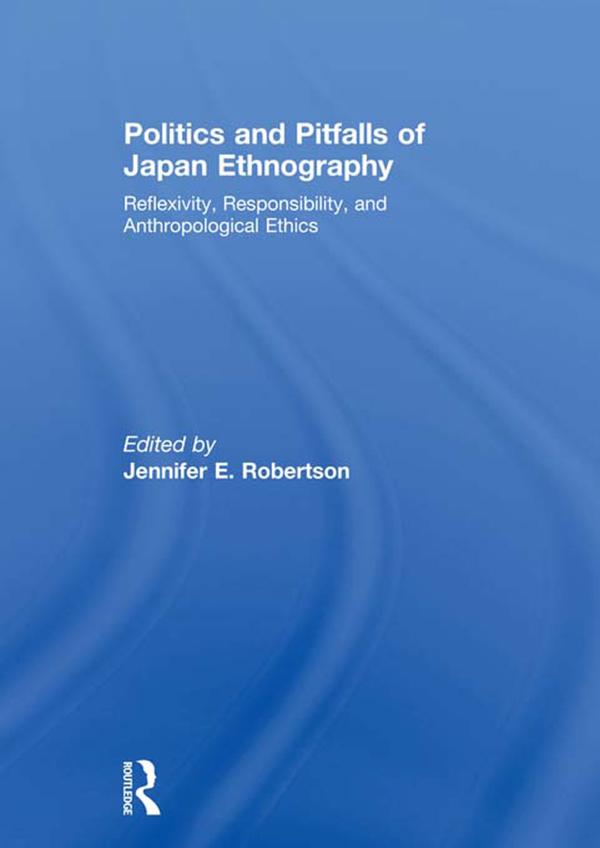
Four anthropologists, Elise Edwards, Ann Elise Lewallen, Bridget Love and Tomomi Yamaguchi, draw on their fieldwork experiences in Japan to demonstrate collectively the inadequacy of both the Code of Ethics developed by the American Anthropological Association (AAA) and the dictates of Institutional Review Boards (IRB) when dealing with messy human realities. The four candidly and critically explore the existential dilemmas they were forced to confront with respect to this inadequacy, for the AAA’s code and IRBs consider neither the vulnerability and powerlessness of ethnographers nor the wholly unethical (and even criminal) deportment of some informants. As Jennifer Robertson points out in her Introduction, whereas the AAA’s Code tends to perpetuate the stereotype of more advantaged fieldworkers studying less advantaged peoples, IRBs appear to protect their home institutions (from possible litigation) rather than living and breathing people whose lives are often ethically compromised irrespective of the presence of an ethnographer. In her commentary, Sabine Frühstück, who incurred ample experience with ethical dilemmas in the course of her pathbreaking ethnographic research on Japan’s Self-Defense Forces, situates the four articles in a broader theoretical context, and emphasizes the link between political engagement and ethnographic accuracy.
This book was previously published as a special issue of Critical Asian Studies.
Betal nemt med kort, Klarna, Apple Pay eller Google Pay. Ikke tilfreds? Du har altid 14 dages fortrydelsesret. Læs mere i vores vilkår. Har du spørgsmål, så send os en mail på hello@memmo.org.
Memmo gør det nemmere at studere – uanset hvor du er i verden. Hos os samler du dine kursusbøger og smarte studieværktøjer ét sted: resuméer, quizzer, podcasts og flashcards. Og så er der Ted, din studieven, der svarer på alt, du undrer dig over. Over 50 000 studerende studerer allerede her – bygget til at hjælpe dig med at lære hurtigere og stresse mindre.