
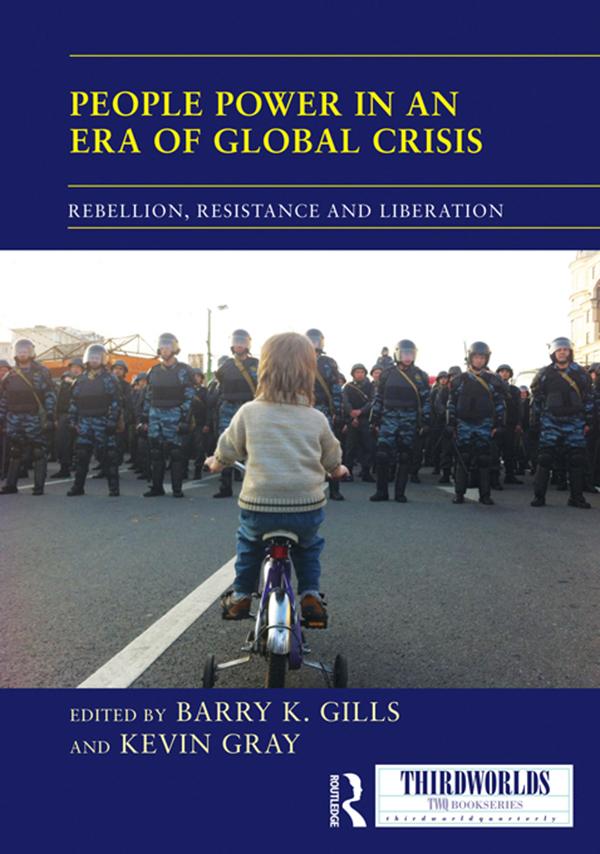
A quarter of a century has now passed since the historic popular uprising that led to the overthrow of the Ferdinand Marcos dictatorship in the Philippines. The mass movement known as the "People Power Revolution" was not only pivotal to the democratic transition within the Philippines, but it also became an inspiration for subsequent mass movements leading to further democratic transitions throughout the Third World and in the former Communist bloc in Eastern Europe and the Soviet Union. However, the neoliberal economic policies subsequently pursued by newly democratic governments throughout the Third World led all but the most celebratory observers to note the constrained and limited nature of these formal political transitions. This volume poses the question of the extent to which ‘people power’ has been able to play an active role resisting neoliberalism and deepen substantive democracy and social justice. Through a series of case studies of the regions and individual countries of Asia, Africa, Latin America and Eastern Europe, the contributions in the volume provide a new set of original and in-depth critical assessments of the nature of the longer-term impact of the democratic transitions commencing in the 1980s and continuing until the present, and questioning their impact and potential influence on human dignity, freedom, justice, and self-determination, and thus opening new avenues of enquiry into the future of democracy.
This book was originally published as a special issue of Third World Quarterly.
Betal nemt med kort, Klarna, Apple Pay eller Google Pay. Ikke tilfreds? Du har altid 14 dages fortrydelsesret. Læs mere i vores vilkår. Har du spørgsmål, så send os en mail på hello@memmo.org.
Memmo gør det nemmere at studere – uanset hvor du er i verden. Hos os samler du dine kursusbøger og smarte studieværktøjer ét sted: resuméer, quizzer, podcasts og flashcards. Og så er der Ted, din studieven, der svarer på alt, du undrer dig over. Over 50 000 studerende studerer allerede her – bygget til at hjælpe dig med at lære hurtigere og stresse mindre.