
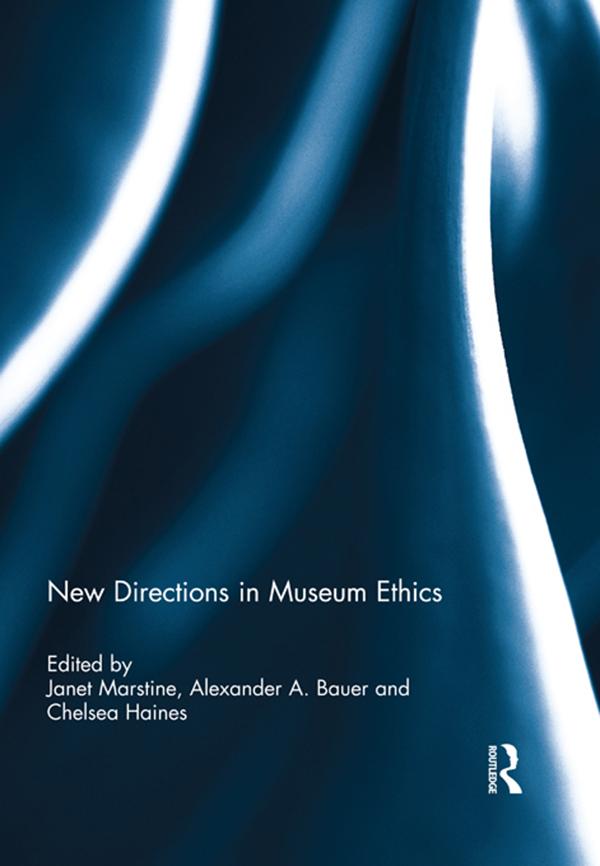
This book considers key ethical questions in museum policy and practice, particularly those related to issues of collection and display. What does a collection signify in the twenty-first century museum? How does an engagement with immateriality challenge museums’ concept of ownership, and how does that immateriality translate into the design of exhibitions and museum space? Are museums still about safeguarding objects, and what does safeguarding mean for diverse individuals and communities today? How does the notion of the museum as a performative space challenge our perceptions of the object?
The scholarship represented in this volume is a testament to the range and significance of critical inquiry in museum ethics. Together, the chapters resist a legalistic interpretation, bound by codes and common practice, to advance an ethics discourse that is richly theorized, constantly changing and contingent on diverse external factors. Contributors take stock of innovative research to articulate a new museum ethics founded on the moral agency of museums, the concept that museums have both the capacity and the responsibility to create social change.
This book is based on a special issue of Museum Management and Curatorship.
Betal nemt med kort, Klarna, Apple Pay eller Google Pay. Ikke tilfreds? Du har altid 14 dages fortrydelsesret. Læs mere i vores vilkår. Har du spørgsmål, så send os en mail på hello@memmo.org.
Memmo gør det nemmere at studere – uanset hvor du er i verden. Hos os samler du dine kursusbøger og smarte studieværktøjer ét sted: resuméer, quizzer, podcasts og flashcards. Og så er der Ted, din studieven, der svarer på alt, du undrer dig over. Over 50 000 studerende studerer allerede her – bygget til at hjælpe dig med at lære hurtigere og stresse mindre.