
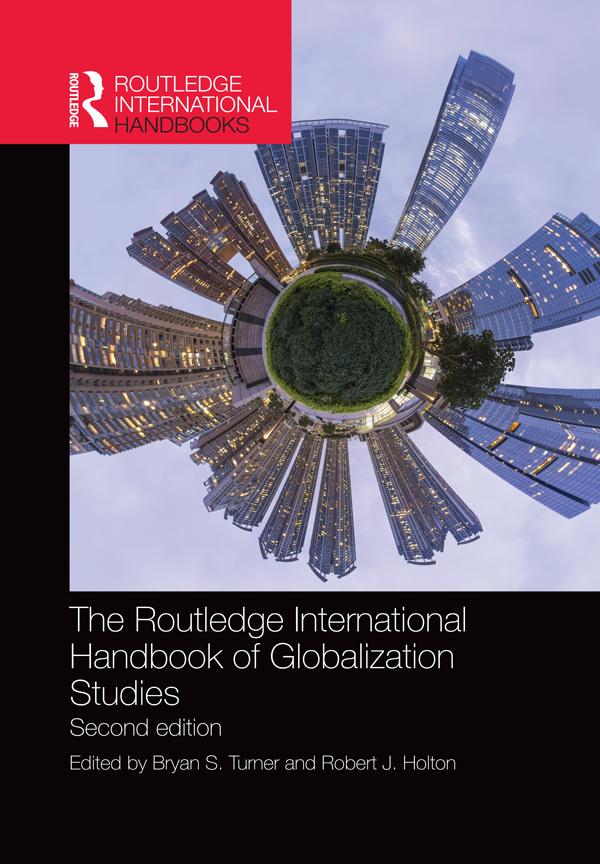
The second edition of the Routledge International Handbook of Globalization Studies offers students clear and informed chapters on the history of globalization and key theories that have considered the causes and consequences of the globalization process. There are substantive sections looking at demographic, economic, technological, social and cultural changes in globalization. The handbook examines many negative aspects – new wars, slavery, illegal migration, pollution and inequality – but concludes with an examination of responses to these problems through human rights organizations, international labour law and the growth of cosmopolitanism. There is a strong emphasis on interdisciplinary approaches with essays covering sociology, demography, economics, politics, anthropology and history.
The second edition has been completely revised and features important new thinking on themes such as Islamophobia and the globalization of religious conflict, shifts in global energy production such as fracking, global inequalities, fiscal transformations of the state and problems of taxation, globalization and higher education, and an analysis of the general sense of catastrophe that surrounds contemporary understandings of the consequences of a global world.
Betal nemt med kort, Klarna, Apple Pay eller Google Pay. Ikke tilfreds? Du har altid 14 dages fortrydelsesret. Læs mere i vores vilkår. Har du spørgsmål, så send os en mail på hello@memmo.org.
Memmo gør det nemmere at studere – uanset hvor du er i verden. Hos os samler du dine kursusbøger og smarte studieværktøjer ét sted: resuméer, quizzer, podcasts og flashcards. Og så er der Ted, din studieven, der svarer på alt, du undrer dig over. Over 50 000 studerende studerer allerede her – bygget til at hjælpe dig med at lære hurtigere og stresse mindre.