
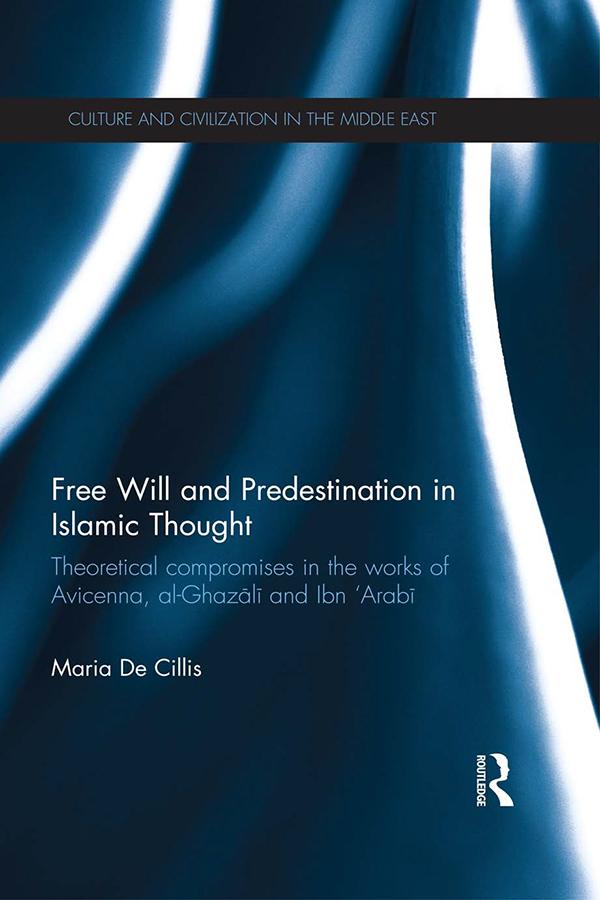
The subject of "human free-will" versus "divine predestination" is one of the most contentious topics in classical Islamic thought. By focusing on a theme of central importance to any philosophy of religion, and to Islam in particular, this book offers a critical study of the intellectual contributions offered to this discourse by three key medieval Islamic thinkers: Avicenna, al-Ghāzālī and Ibn ʿArabī.
Through investigation of primary sources, Free Will and Predestination in Islamic Thought establishes the historical, political and intellectual circumstances which prompted Avicenna, al-Ghāzālī and Ibn ʿArabī’s attempts at harmonization. By analysing the theoretical and linguistic ‘techniques’ which were employed to convey these endeavours, this book demonstrates that the three individuals were committed to compromise between philosophical, theological and mystical outlooks.
Arguing that the three scholars’ treatments of the so-called qaḍā wa’l-qadar (decree and destiny) and ikhtiyār (free-will) issues were innovative, influential and fundamentally more complex than hitherto recognized, this book contributes to a fuller understanding of Islamic intellectual history and culture and will be useful to researchers interested in Islamic Studies, Religion and Islamic Mysticism.
Betal nemt med kort, Klarna, Apple Pay eller Google Pay. Ikke tilfreds? Du har altid 14 dages fortrydelsesret. Læs mere i vores vilkår. Har du spørgsmål, så send os en mail på hello@memmo.org.
Memmo gør det nemmere at studere – uanset hvor du er i verden. Hos os samler du dine kursusbøger og smarte studieværktøjer ét sted: resuméer, quizzer, podcasts og flashcards. Og så er der Ted, din studieven, der svarer på alt, du undrer dig over. Over 50 000 studerende studerer allerede her – bygget til at hjælpe dig med at lære hurtigere og stresse mindre.