
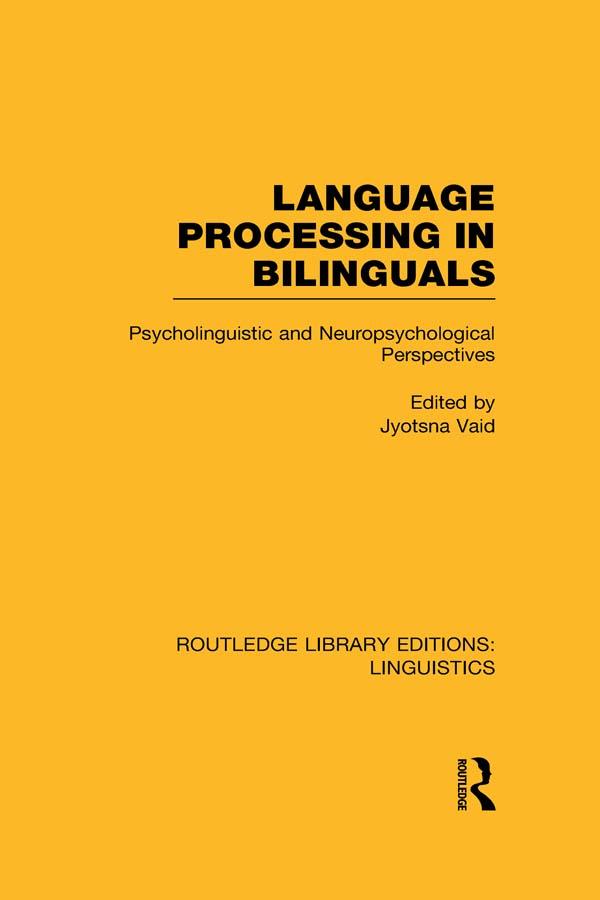
For decades, bilingualism has resisted definition. If bilingualism is defined as habitual, fluent, correct and accent-free use of two languages, few individuals would qualify as bilinguals. A more viable approach may be to concede that ‘bilingual’ can be seen instead as a range of points on a continuum that allows for differences. The psychological study of bilingualism encompasses a wide range of phenomena including the organization and representation of the grammar, the perception and production of language mixing, cerebral lateralization of language functions, and patterns of recovery of aphasic patients. This book collects together an international array of researchers in experimental psychology, linguistics and neuropsychology, who bring their expertise to bear on the critical issues that are raised by the bilingual phenomena.
Betal nemt med kort, Klarna, Apple Pay eller Google Pay. Ikke tilfreds? Du har altid 14 dages fortrydelsesret. Læs mere i vores vilkår. Har du spørgsmål, så send os en mail på hello@memmo.org.
Memmo gør det nemmere at studere – uanset hvor du er i verden. Hos os samler du dine kursusbøger og smarte studieværktøjer ét sted: resuméer, quizzer, podcasts og flashcards. Og så er der Ted, din studieven, der svarer på alt, du undrer dig over. Over 50 000 studerende studerer allerede her – bygget til at hjælpe dig med at lære hurtigere og stresse mindre.