
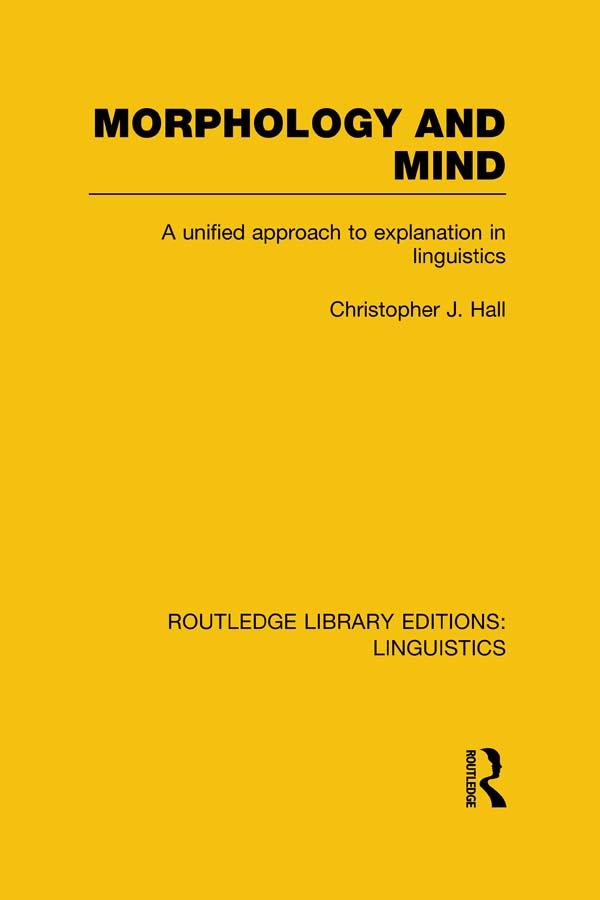
The central concern of this book is the explanation of linguistic form. It examines in detail certain cross-linguistic patterns in morphological systems, providing unified explanations of the observation that suffixes predominate over prefixes and the correlation between affix position and syntactic head position. The explanation of the suffixing preference is one which appeals to principles of language processing, tempered by cognitive constraints underlying language change. These factors, coupled with generative morphological analysis, also provide an explanation for the head/affix correlation.
The extended case-study illustrates a unified, integrative approach to explanation in linguistics which stresses two major features: the search for cognitive or other functional principles that could potentially underlie formally specified regularities; and the need for a micro-analysis of the mechanisms of ‘linkage’ between regularity and explanation. The natural methodological consequence of such an approach is a move towards greater cooperation between the various subdisciplines of linguistics, as well as a greatly needed expansion of cross-disciplinary research. The author’s broad training in theoretical morphology, formal and typological universals, and language processing, allows him to cross traditional boundaries and view the complex interactions between theoretical linguistic principles and cognitive mechanisms with considerable clarity of vision.
Betal nemt med kort, Klarna, Apple Pay eller Google Pay. Ikke tilfreds? Du har altid 14 dages fortrydelsesret. Læs mere i vores vilkår. Har du spørgsmål, så send os en mail på hello@memmo.org.
Memmo gør det nemmere at studere – uanset hvor du er i verden. Hos os samler du dine kursusbøger og smarte studieværktøjer ét sted: resuméer, quizzer, podcasts og flashcards. Og så er der Ted, din studieven, der svarer på alt, du undrer dig over. Over 50 000 studerende studerer allerede her – bygget til at hjælpe dig med at lære hurtigere og stresse mindre.