
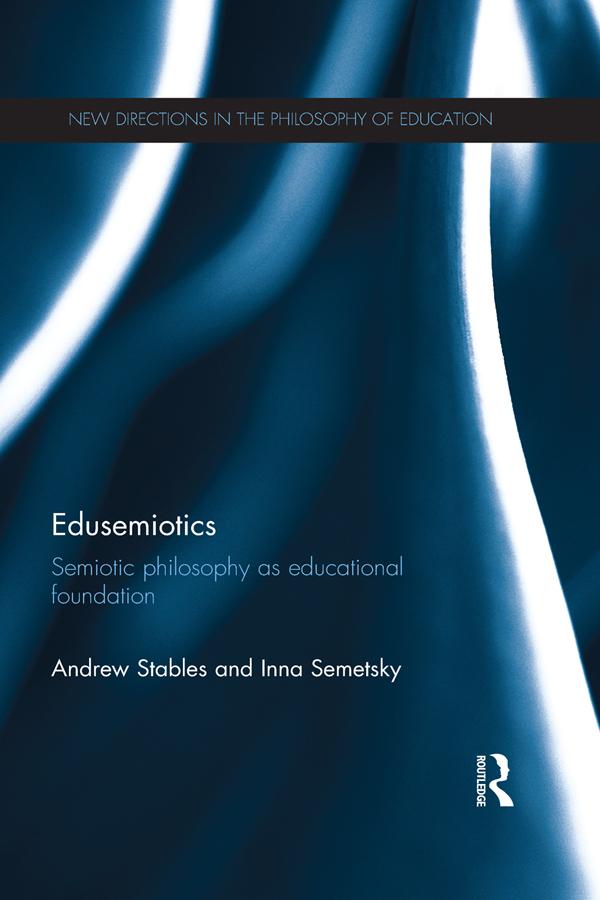
Edusemiotics addresses an emerging field of inquiry, educational semiotics, as a philosophy of and for education. Using "sign" as a unit of analysis, educational semiotics amalgamates philosophy, educational theory and semiotics. Edusemiotics draws on the intellectual legacy of such philosophers as John Dewey, Charles Sanders Peirce, Gilles Deleuze and others across Anglo-American and continental traditions.
This volume investigates the specifics of semiotic knowledge structures and processes, exploring current dilemmas and debates regarding self-identity, learning, transformative and lifelong education, leadership and policy-making, and interrogating an important premise that still haunts contemporary educational philosophy: Cartesian dualism. In defiance of substance dualism and the fragmentation of knowledge that still inform education, the book offers a unifying paradigm for education as edusemiotics and emphasises ethical education in compliance with the semiotic unity between knowledge and action.
Chapters contain accessible discussions in the context of educational philosophy and theory, crossing the borders between logic, art, and science together with a provocative theoretical critique. Recently awarded a PESA book award for its contribution to the philosophy of education, Edusemiotics will appeal to an academic readership in education, philosophy and cultural studies, while also being an inspiring resource for students.
Betal nemt med kort, Klarna, Apple Pay eller Google Pay. Ikke tilfreds? Du har altid 14 dages fortrydelsesret. Læs mere i vores vilkår. Har du spørgsmål, så send os en mail på hello@memmo.org.
Memmo gør det nemmere at studere – uanset hvor du er i verden. Hos os samler du dine kursusbøger og smarte studieværktøjer ét sted: resuméer, quizzer, podcasts og flashcards. Og så er der Ted, din studieven, der svarer på alt, du undrer dig over. Over 50 000 studerende studerer allerede her – bygget til at hjælpe dig med at lære hurtigere og stresse mindre.