
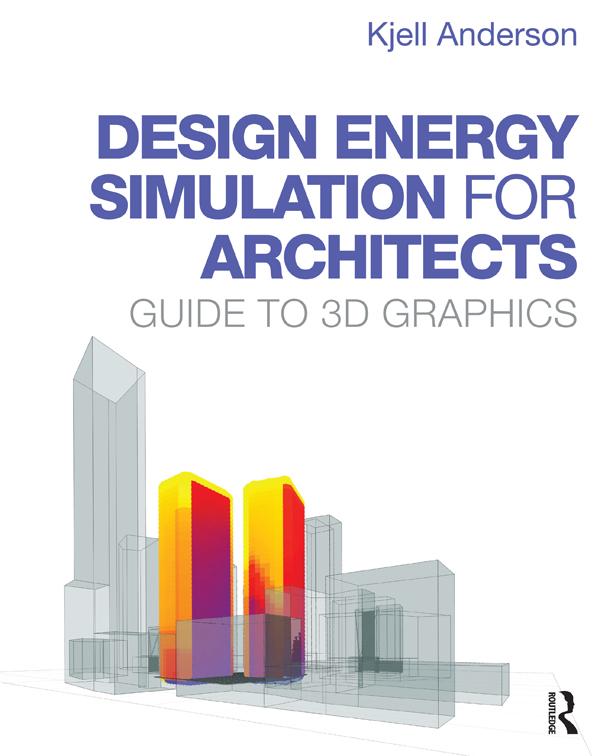
Leading architectural firms are now using in-house design simulation to help make more sustainable design decisions. Taking advantage of these new tools requires understanding of what can be done with simulation, how to do it, and how to interpret the results.
This software-agnostic book, which is intended for you to use as a professional architect, shows you how to reduce the energy use of all buildings using simulation for shading, daylighting, airflow, and energy modeling. Written by a practicing architect who specializes in design simulation, the book includes 30 case studies of net-zero buildings, as well as of projects with less lofty goals, to demonstrate how energy simulation has helped designers make early decisions.
Within each case study, author Kjell Anderson mentions the software used, how the simulation was set up, and how the project team used the simulation to make design decisions. Chapters and case studies are written so that you learn general concepts without being tied to particular software. Each chapter builds on the theory from previous chapters, includes a summary of concept-level hand calculations (if applicable), and gives comprehensive explanations with graphic examples. Additional topics include simulation basics, comfort, climate analysis, a discussion on how simulation is integrated into some firms, and an overview of some popular design simulation software.
Betal nemt med kort, Klarna, Apple Pay eller Google Pay. Ikke tilfreds? Du har altid 14 dages fortrydelsesret. Læs mere i vores vilkår. Har du spørgsmål, så send os en mail på hello@memmo.org.
Memmo gør det nemmere at studere – uanset hvor du er i verden. Hos os samler du dine kursusbøger og smarte studieværktøjer ét sted: resuméer, quizzer, podcasts og flashcards. Og så er der Ted, din studieven, der svarer på alt, du undrer dig over. Over 50 000 studerende studerer allerede her – bygget til at hjælpe dig med at lære hurtigere og stresse mindre.