
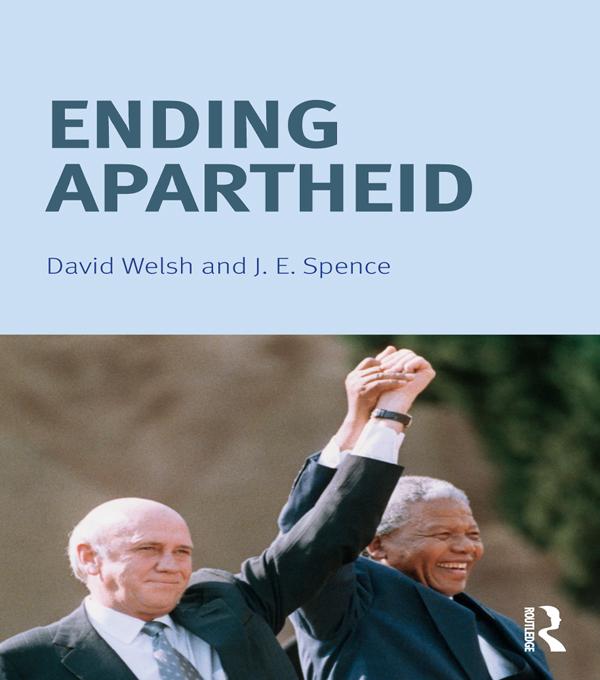
The release of Nelson Mandela from twenty-seven years imprisonment in 1990 and the free elections which followed four years later were among the most dramatic events of the twentieth century.
David Welsh and J. E. Spence here examine the complex forces which lay behind that drama. They chart the rise and decline of apartheid ideology in South Africa, the internal insurrection and increased international isolation which characterised the 1980s and the political roller-coaster ride of the period after 1990 as constitutional negotiations got underway. Based on extensive interviews with those involved, Ending Apartheid traces the negotiating process in penetrating detail, noting the political skills of de Klerk and Mandela in keeping their potentially unruly constituencies in line and avoiding the major violence that many had predicted. Reaching agreement on a democratic constitution was a major achievement that surprised many sceptical observers, but the book ends on a more sombre note. Reviewing the period subsequent to the transition, it argues that while progress has been made, the future of South Africa's democracy is still far from assured.
Written by two eminent scholars with decades of experience teaching in the field, Ending Apartheid is an invaluable resource for all students of South African politics seeking a deeper understanding of a defining episode in recent history.
Betal nemt med kort, Klarna, Apple Pay eller Google Pay. Ikke tilfreds? Du har altid 14 dages fortrydelsesret. Læs mere i vores vilkår. Har du spørgsmål, så send os en mail på hello@memmo.org.
Memmo gør det nemmere at studere – uanset hvor du er i verden. Hos os samler du dine kursusbøger og smarte studieværktøjer ét sted: resuméer, quizzer, podcasts og flashcards. Og så er der Ted, din studieven, der svarer på alt, du undrer dig over. Over 50 000 studerende studerer allerede her – bygget til at hjælpe dig med at lære hurtigere og stresse mindre.