
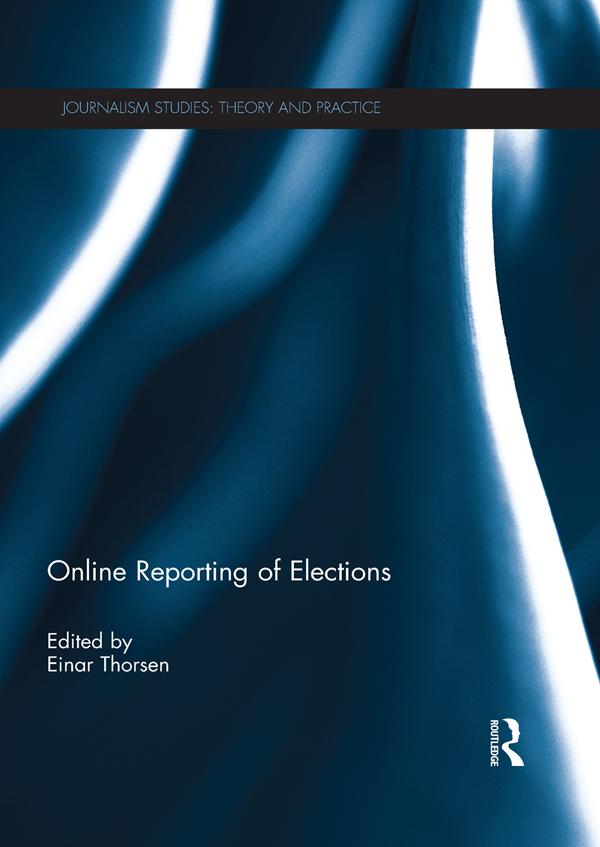
This book contributes to debates concerning online reporting of elections and the challenges facing journalism in the context of democratic change. The speed of technological adaptation by journalists and their audiences means online news is gradually becoming a normalised part of media landscapes across the world. Journalists monitor social media for insight into the political process and as an instant indication of "public sentiment", rather than waiting for press releases and opinion polls. Citizens are actively participating in online political reporting too, through publishing eyewitness accounts, political commentary, crowd-sourcing and fact-checking information (of political manifestos and media reports alike). It is therefore growing increasingly important to understand how political journalism is evolving through new communicative forms and practices, in order to critique its epistemological role and function in democratic societies, and examine how these interventions influence daily online political reporting across different national contexts.
This volume covers comparative, research-based studies across a range of national contexts and electoral systems, including Australia, ten African countries, the European Union, Greece, the Netherlands, India, Iran, Sweden, the UK and the USA.
This book was originally published as a special issue of Journalism Practice.
Betal nemt med kort, Klarna, Apple Pay eller Google Pay. Ikke tilfreds? Du har altid 14 dages fortrydelsesret. Læs mere i vores vilkår. Har du spørgsmål, så send os en mail på hello@memmo.org.
Memmo gør det nemmere at studere – uanset hvor du er i verden. Hos os samler du dine kursusbøger og smarte studieværktøjer ét sted: resuméer, quizzer, podcasts og flashcards. Og så er der Ted, din studieven, der svarer på alt, du undrer dig over. Over 50 000 studerende studerer allerede her – bygget til at hjælpe dig med at lære hurtigere og stresse mindre.