
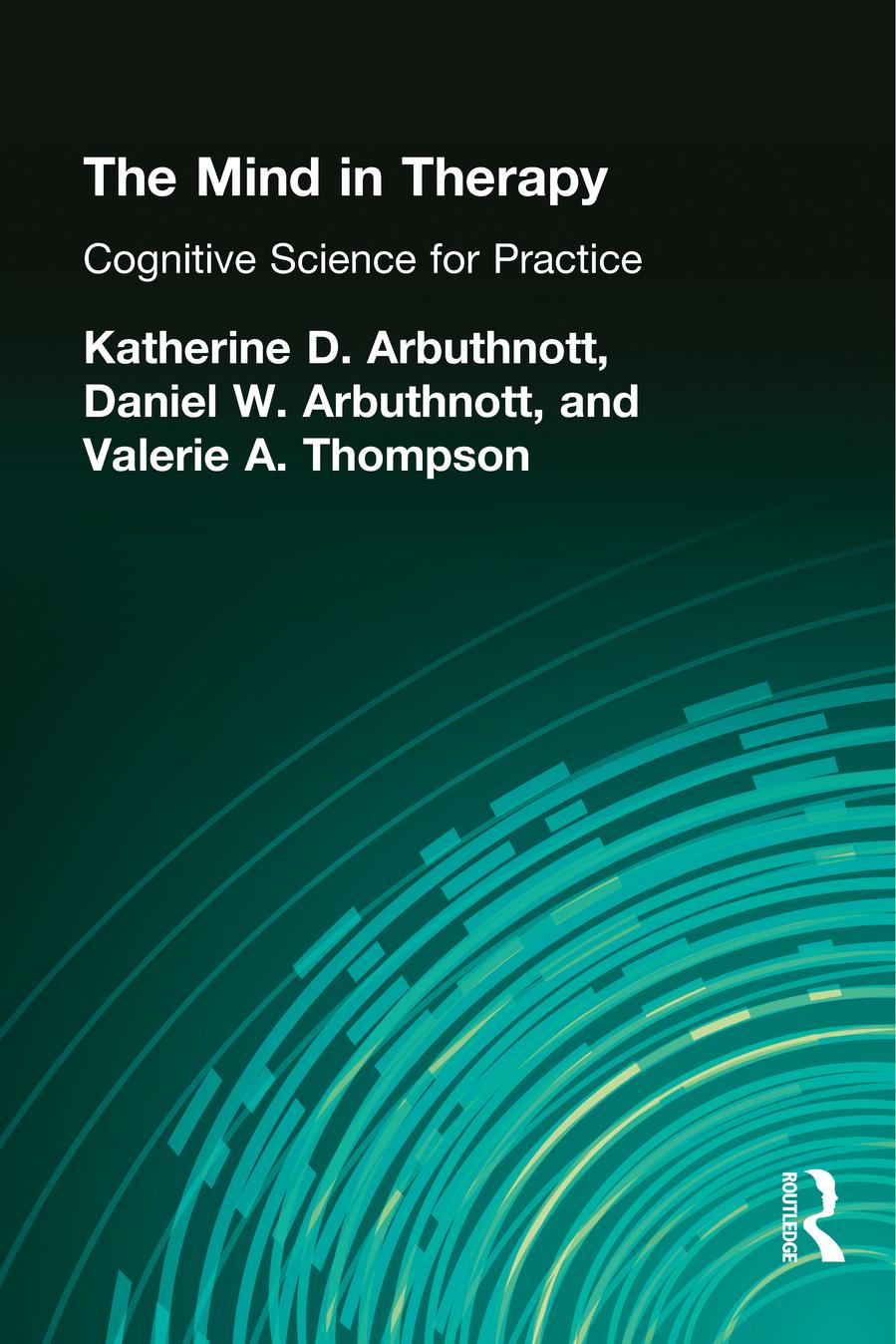
Human mental capacities and processes are the raw materials with which psychotherapists work. Thus what cognitive scientists have discovered in recent decades is potentially tremendous value for psychotherapeutic practice. But the new knowledge is not readily accessible to therapists, who find both language and methodology off-putting.
The Mind in Therapy bridges the gap. It offers a comprehensive overview of the relevant range of cognitive activities, ranging from complex mental operations such as problem solving, decision making, reasoning, and metacognition to basic functions such as attention, memory, and emotion. The authors integrate key new findings about the interaction between cognition and emotion, inhibition, and counterfactual thinking--processes that loom large in practice. Each chapter reviews an area of cognitive research, clearly explains the findings, and highlights their implications and applications in diverse models of therapy--cognitive, behavioral, psychodynamic, humanistic, and family. Each includes case vignettes that illustrate the ways in which the concepts are important and useful in practice.
All therapists rely on the human mind to effect the change they seek. The clearer understanding of human cognitive capacities, idiosyncrasies, and limitations--their own as well as clients'--that they will gain from this book will enhance the effectiveness of both beginning and experienced practitioners, whatever their orientation.
Betal nemt med kort, Klarna, Apple Pay eller Google Pay. Ikke tilfreds? Du har altid 14 dages fortrydelsesret. Læs mere i vores vilkår. Har du spørgsmål, så send os en mail på hello@memmo.org.
Memmo gør det nemmere at studere – uanset hvor du er i verden. Hos os samler du dine kursusbøger og smarte studieværktøjer ét sted: resuméer, quizzer, podcasts og flashcards. Og så er der Ted, din studieven, der svarer på alt, du undrer dig over. Over 50 000 studerende studerer allerede her – bygget til at hjælpe dig med at lære hurtigere og stresse mindre.