
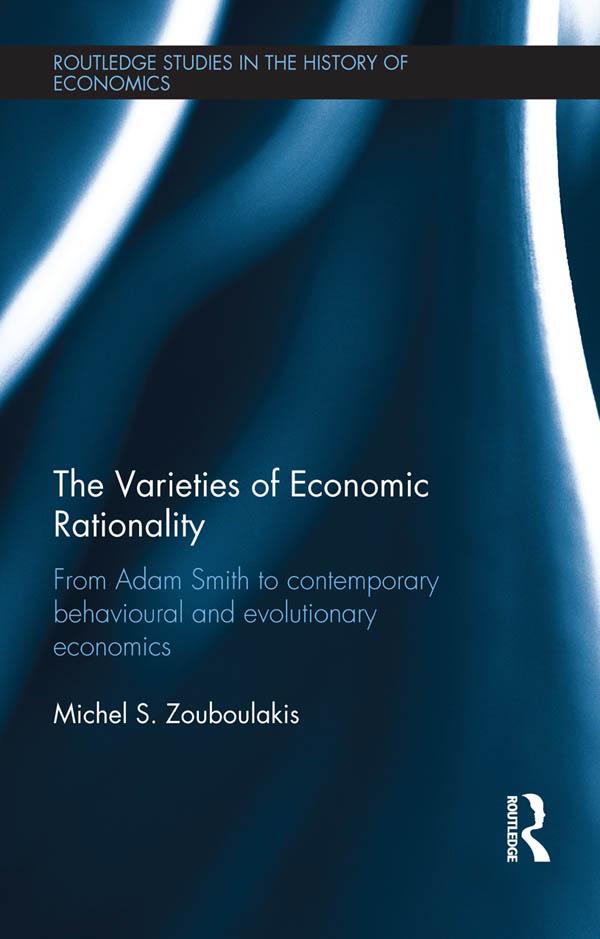
The concept of economic rationality is important for the historical evolution of Economics as a scientific discipline. The common idea about this concept -even between economists- is that it has a unique meaning which is universally accepted. This new volume argues that "economic rationality" is not not a universal concept with one single meaning, and that it in fact has different, if not conflicting, interpretations in the evolution of discourse on economics. In order to achieve this, the book traces the historical evolution of the concept of economic rationality from Adam Smith to the present, taking in thinkers from Mill to Friedman, and encompassing approaches from neoclassical to behavioural economics.
The book charts this history in order to reveal important instances of conceptual transformation of the meaning of economic rationality. In doing so, it presents a uniquely detailed study of the historical change of the many faces of the homo oeconomicus .
Betal nemt med kort, Klarna, Apple Pay eller Google Pay. Ikke tilfreds? Du har altid 14 dages fortrydelsesret. Læs mere i vores vilkår. Har du spørgsmål, så send os en mail på hello@memmo.org.
Memmo gør det nemmere at studere – uanset hvor du er i verden. Hos os samler du dine kursusbøger og smarte studieværktøjer ét sted: resuméer, quizzer, podcasts og flashcards. Og så er der Ted, din studieven, der svarer på alt, du undrer dig over. Over 50 000 studerende studerer allerede her – bygget til at hjælpe dig med at lære hurtigere og stresse mindre.