
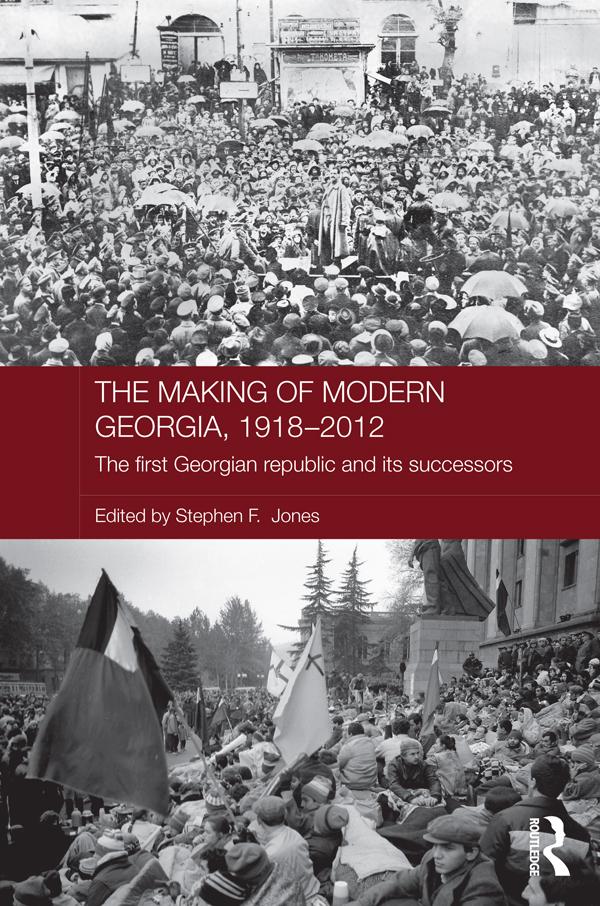
When most of Eastern Europe was struggling with dictatorships of one kind or another, the Democratic Republic of Georgia (1918-1921) established a constitution, a parliamentary system with national elections, an active opposition, and a free press. Like the Democratic Republic of Georgia in 1918, its successors emerged after 1991 from a bankrupt empire, and faced, yet again, the task of establishing a new economic, political and social system from scratch. In both 1918 and 1991, Georgia was confronted with a hostile Russia and followed a pro-Western and pro-democratic course. The top regional experts in this book explore the domestic and external parallels between the Georgian post-colonial governments of the early twentieth and twenty-first centuries. How did the inexperienced Georgian leaders in both eras deal with the challenge of secessionism, what were their state building strategies, and what did democracy mean to them? What did their electoral systems look like, why were their economic strategies so different, and how did they negotiate with the international community neighbouring threats. These are the central challenges of transitional governments around the world today. Georgia’s experience over one hundred years suggests that both history and contemporary political analysis offer the best (and most interesting) explanation of the often ambivalent outcomes.
Betal nemt med kort, Klarna, Apple Pay eller Google Pay. Ikke tilfreds? Du har altid 14 dages fortrydelsesret. Læs mere i vores vilkår. Har du spørgsmål, så send os en mail på hello@memmo.org.
Memmo gør det nemmere at studere – uanset hvor du er i verden. Hos os samler du dine kursusbøger og smarte studieværktøjer ét sted: resuméer, quizzer, podcasts og flashcards. Og så er der Ted, din studieven, der svarer på alt, du undrer dig over. Over 50 000 studerende studerer allerede her – bygget til at hjælpe dig med at lære hurtigere og stresse mindre.