
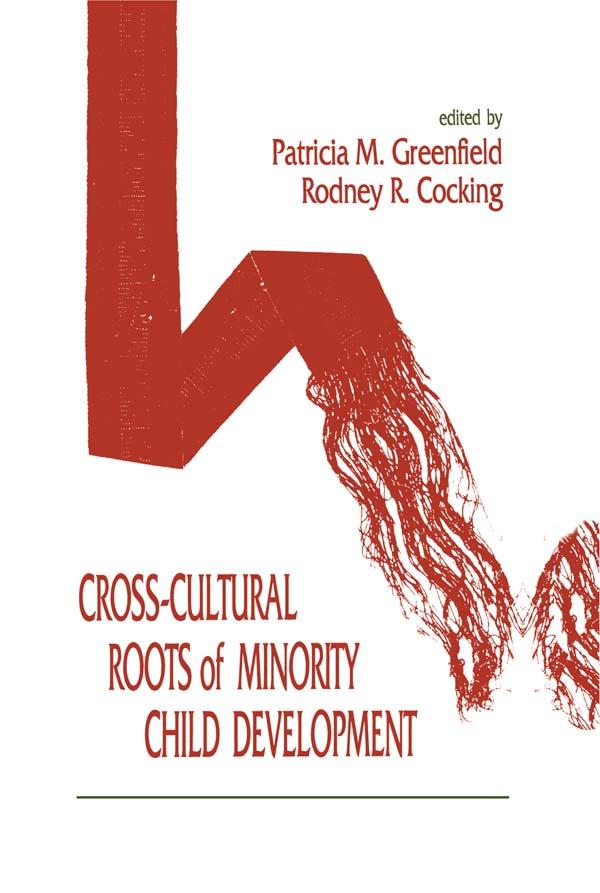
This book constitutes the first time in the field of developmental psychology that cross-cultural roots of minority child development have been studied in their ancestral societies in a systematic way--and by an international group of researchers. Most child development and child psychology texts take cultural diversity in development into account only as an addendum or as a special case--it is not integrated into a comprehensive theory or model of development. The purpose of this text is to redress this situation by enlisting insiders' and outsiders' perspectives on socialization and development in a diverse sampling of the world's cultures, including developing regions that often lack the means to speak for themselves in the arena of international social science.
The unique feature of this text is the paradigm. For the minority groups represented, the questions focused on how development was behaviorally expressed within the culture of origin and in new societal contexts. Thus, developmental issues--such as language and mother-child interactions--for African-American children are considered in the United States as well as in the African culture of origin and in France as a country of immigration. This paradigm is considered for African and Asian cultures and the Americas, including Hispanics from Mexico as well as Native Americans.
Specific questions posed consider the extent to which:
* the development and socialization of minority children can be seen as continuous with their ancestral cultures;
* the cultural and political conditions in the United States, Canada, and France have modified developmental and socialization processes, yielding discontinuities with ancestral cultures;
* the ancestral cultures have changed, yielding cross-generational discontinuities in the development and socialization of immigrants from the very same countries.
* the role of interdependence and independence in developmental scripts can account for historical continuities and discontinuities in development and socialization, both across and within cultures.
These questions not only provide the unifying theme of this unique book but also a model for conceptualizing multi-culturalism within a unified framework for developmental psychology.
Betal nemt med kort, Klarna, Apple Pay eller Google Pay. Ikke tilfreds? Du har altid 14 dages fortrydelsesret. Læs mere i vores vilkår. Har du spørgsmål, så send os en mail på hello@memmo.org.
Memmo gør det nemmere at studere – uanset hvor du er i verden. Hos os samler du dine kursusbøger og smarte studieværktøjer ét sted: resuméer, quizzer, podcasts og flashcards. Og så er der Ted, din studieven, der svarer på alt, du undrer dig over. Over 50 000 studerende studerer allerede her – bygget til at hjælpe dig med at lære hurtigere og stresse mindre.