
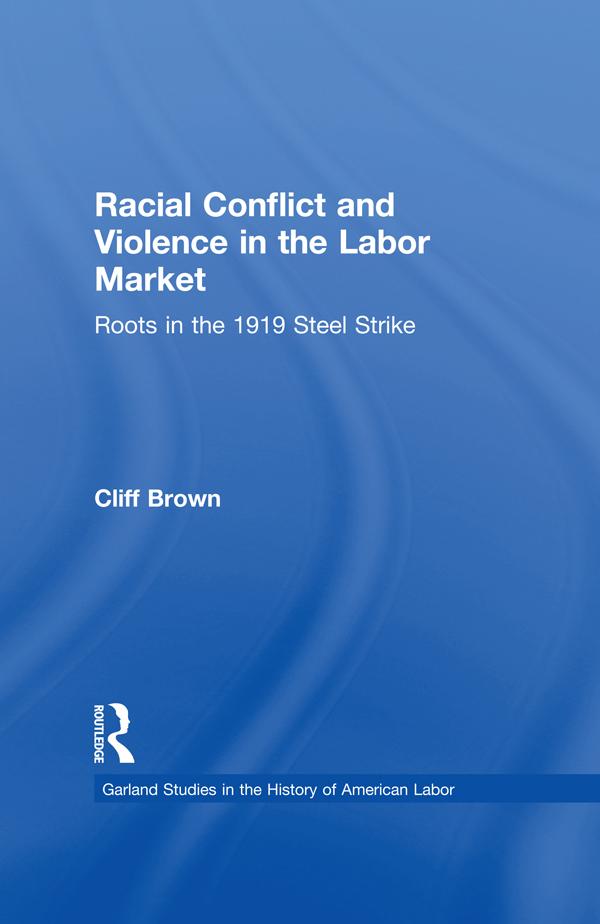
This book focuses on community-level race relations during the 1919 Steel Strike, when intense job competition contributed to racial conflict among the nation's steel workers. As the Great Migration brought thousands of black workers to northern cities, their lower labor costs generated racially split labor markets in the industrial sector. Further, the discriminatory policies of labor unions forced many blacks to serve as strike breakers during periods of class conflict. As a result, the migration heightened racial conflict and undercut important union organizing initiatives. The 1919 Steel Strike illustrates how racial divisions crippled many American unions, a pattern that helps to explain the demise of organized labor during the 1920's. No previous studies of the 1919 Steel Strike have systematically compared community processes to determine how local events shaped the strike's outcome. Despite the failure of the 1919 Steel Strike, the varied experiences of workers in different communities reveal much about the causes of racial conflict and the possibilities of interracial solidarity. This study finds that patterns of black migration, local government repression of labor, the organizational strength of local unions, and employers' efforts to inflame racial tension all help to explain community-level variation in interracial solidarity and conflict. (Ph. D. dissertation, Emory University, 1996; revised with new preface)
Betal nemt med kort, Klarna, Apple Pay eller Google Pay. Ikke tilfreds? Du har altid 14 dages fortrydelsesret. Læs mere i vores vilkår. Har du spørgsmål, så send os en mail på hello@memmo.org.
Memmo gør det nemmere at studere – uanset hvor du er i verden. Hos os samler du dine kursusbøger og smarte studieværktøjer ét sted: resuméer, quizzer, podcasts og flashcards. Og så er der Ted, din studieven, der svarer på alt, du undrer dig over. Over 50 000 studerende studerer allerede her – bygget til at hjælpe dig med at lære hurtigere og stresse mindre.
Du kan måske også lide
Køb bogen0