
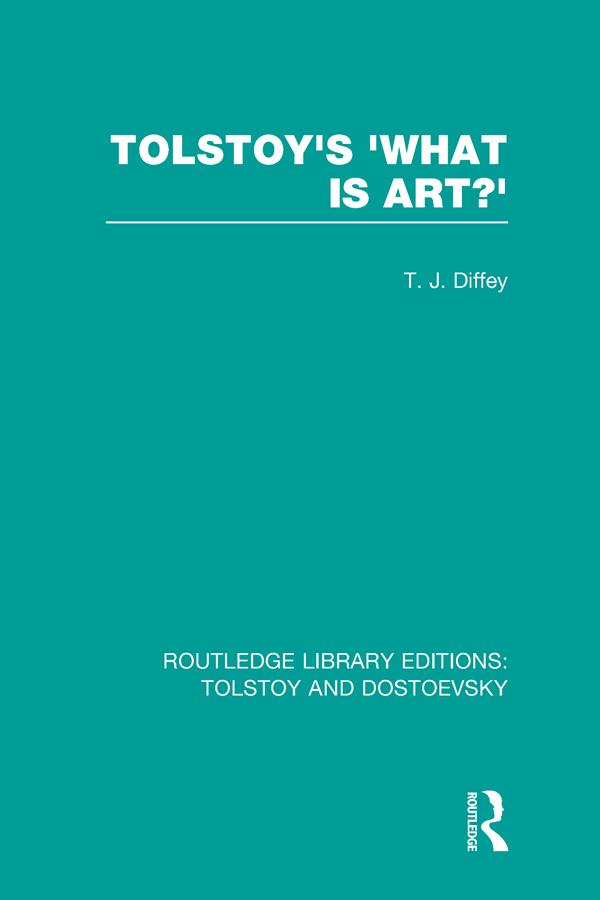
With its demand that works of art be judged according to the their morally didactic content, Tolstoy’s reviled aesthetics has seemed to exclude from the canon far too many works widely accepted as masterpieces, including Shakespeare and Beethoven.
This book, first published in 1985, argues that these are not mere oversights on the part of Tolstoy: he knew full well the consequences of his line of reasoning. The author contends that, even if we disagree with and eventually reject much of what Tolstoy concludes, his account of the nature and purpose of art is nevertheless worth consideration.
Diffey’s argument by no means accepts all of ‘What is Art?’, but by suggesting that the work is best interpreted as a counterpoint to the amoral aestheticism prevalent in Russia at the time, he does much to restore it to a status deserving attention, particularly in today’s climate of extreme relativism.
Betal nemt med kort, Klarna, Apple Pay eller Google Pay. Ikke tilfreds? Du har altid 14 dages fortrydelsesret. Læs mere i vores vilkår. Har du spørgsmål, så send os en mail på hello@memmo.org.
Memmo gør det nemmere at studere – uanset hvor du er i verden. Hos os samler du dine kursusbøger og smarte studieværktøjer ét sted: resuméer, quizzer, podcasts og flashcards. Og så er der Ted, din studieven, der svarer på alt, du undrer dig over. Over 50 000 studerende studerer allerede her – bygget til at hjælpe dig med at lære hurtigere og stresse mindre.