
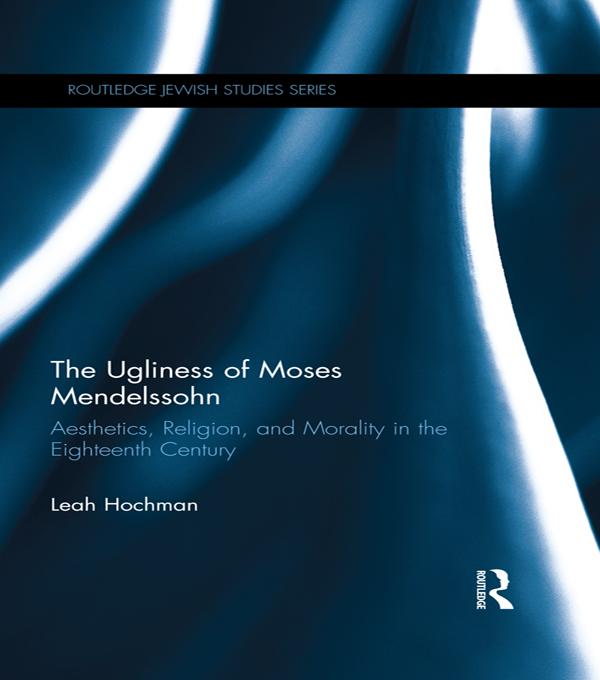
The Ugliness of Moses Mendelssohn examines the idea of ugliness through four angles: philosophical aesthetics, early anthropology, physiognomy and portraiture in the eighteenth-century.
Highlighting a theory that describes the benefit of encountering ugly objects in art and nature, eighteenth-century German Jewish philosopher Moses Mendelssohn recasts ugliness as a positive force for moral education and social progress. According to his theory, ugly objects cause us to think more and thus exercise—and expand—our mental abilities. Known as ugly himself, he was nevertheless portrayed in portraits and in physiognomy as an image of wisdom, gentility, and tolerance. That seeming contradiction—an ugly object (Mendelssohn) made beautiful—illustrates his theory’s possibility: ugliness itself is a positive, even redeeming characteristic of great opportunity.
Presenting a novel approach to eighteenth century aesthetics, this book will be of interest to students and scholars in the fields of Jewish Studies, Philosophy and History.
Betal nemt med kort, Klarna, Apple Pay eller Google Pay. Ikke tilfreds? Du har altid 14 dages fortrydelsesret. Læs mere i vores vilkår. Har du spørgsmål, så send os en mail på hello@memmo.org.
Memmo gør det nemmere at studere – uanset hvor du er i verden. Hos os samler du dine kursusbøger og smarte studieværktøjer ét sted: resuméer, quizzer, podcasts og flashcards. Og så er der Ted, din studieven, der svarer på alt, du undrer dig over. Over 50 000 studerende studerer allerede her – bygget til at hjælpe dig med at lære hurtigere og stresse mindre.