
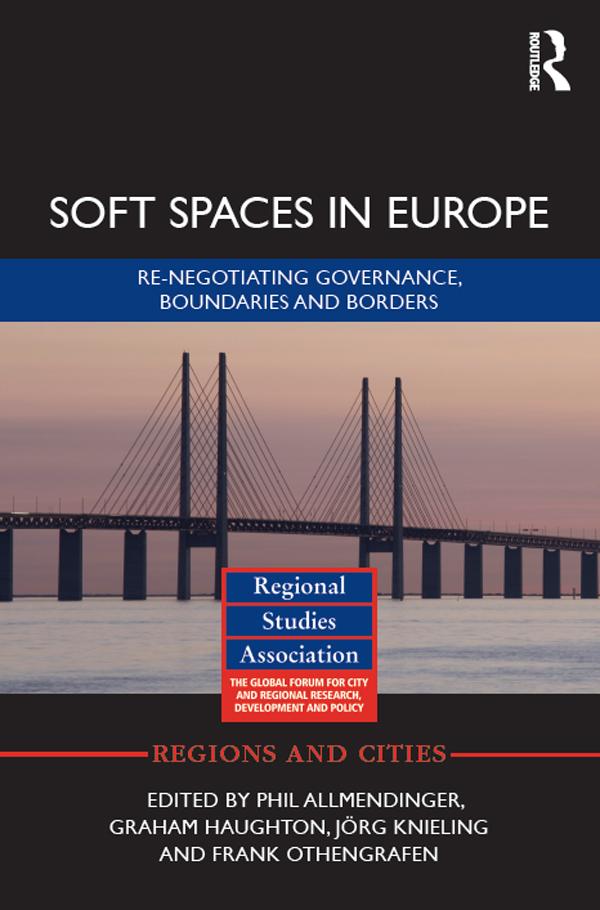
The past thirty years have seen a proliferation of new forms of territorial governance that have come to co-exist with, and complement, formal territorial spaces of government. These governance experiments have resulted in the creation of soft spaces, new geographies with blurred boundaries that eschew existing political-territorial boundaries of elected tiers of government. The emergence of new, non-statutory or informal spaces can be found at multiple levels across Europe, in a variety of circumstances, and with diverse aims and rationales.
This book moves beyond theory to examine the practice of soft spaces. It employs an empirical approach to better understand the various practices and rationalities of soft spaces and how they manifest themselves in different planning contexts. By looking at the effects of new forms of spatial governance and the role of spatial planning in North-western Europe, this book analyses discursive changes in planning policies in selected metropolitan areas and cross-border regions. The result is an exploration of how these processes influence the emergence of soft spaces, governance arrangements and the role of statutory planning in different contexts.
This book provides a deeper understanding of space and place, territorial governance and network governance.
Betal nemt med kort, Klarna, Apple Pay eller Google Pay. Ikke tilfreds? Du har altid 14 dages fortrydelsesret. Læs mere i vores vilkår. Har du spørgsmål, så send os en mail på hello@memmo.org.
Memmo gør det nemmere at studere – uanset hvor du er i verden. Hos os samler du dine kursusbøger og smarte studieværktøjer ét sted: resuméer, quizzer, podcasts og flashcards. Og så er der Ted, din studieven, der svarer på alt, du undrer dig over. Over 50 000 studerende studerer allerede her – bygget til at hjælpe dig med at lære hurtigere og stresse mindre.