
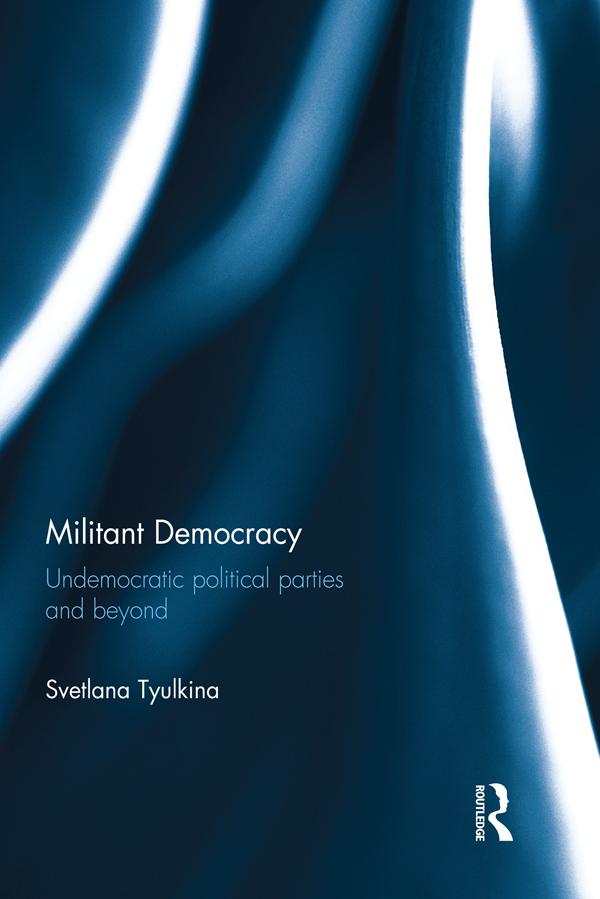
The term ‘militant democracy’ was coined by Karl Loewenstein in the 1930s. He argued that attempts to establish democracy in the Weimar Republic failed due to the lack of militancy against subversive movements. The concept of militant democracy was introduced to legal scholarship and constitutional practice so as to provide democracy with legal means to defend itself against the range of possible activities of non-democratic political actors.
This book offers a broad comparative look at the legal concept of militant democracy. It analyses both theoretical and substantive aspects of this concept, investigating its practice in a number of countries and on a diverse array of issues. Examining cases in Australia, Turkey, Spain, Germany, Israel, India, the USA, and the Council of Europe, Svetlana Tyulkina maps the historical development of militant democracy in constitutional theory and explores its interaction with various traditional and contemporary notions of democracy. The book analyses the possibilities and pitfalls of the concept of militant democracy when applied to protect democracy when it is under threat of harm or destruction by undemocratic actors, and suggests possible solutions and measures to overcome those dangers.
In its evaluation of the capacity and justification for democracies to apply militant democracy measures, this book will be of great use and interest to students and scholars of public comparative constitutional law, international law, human rights law, and comparative politics.
Betal nemt med kort, Klarna, Apple Pay eller Google Pay. Ikke tilfreds? Du har altid 14 dages fortrydelsesret. Læs mere i vores vilkår. Har du spørgsmål, så send os en mail på hello@memmo.org.
Memmo gør det nemmere at studere – uanset hvor du er i verden. Hos os samler du dine kursusbøger og smarte studieværktøjer ét sted: resuméer, quizzer, podcasts og flashcards. Og så er der Ted, din studieven, der svarer på alt, du undrer dig over. Over 50 000 studerende studerer allerede her – bygget til at hjælpe dig med at lære hurtigere og stresse mindre.