
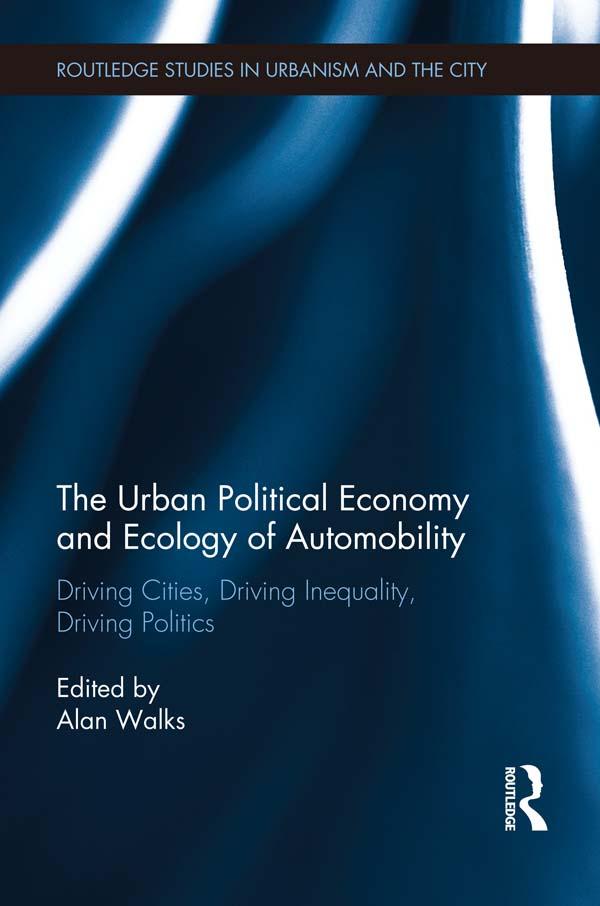
Just how resilient are our urban societies to social, energy, environmental and/or financial shocks, and how does this vary among cities and nations? Can our cities be made more sustainable, and can environmental, economic and social collapse be staved off through changes in urban form and travel behaviour? How might rising indebtedness and the recent series of financial crises be related to automobile dependence and patterns of urban automobile use? To what extent does the system and economy of automobility factor in the production of urban socio-spatial inequalities, and how might these inequalities in mobility be understood and measured? What can we learn from the politics of mobility and social movements within cities? What is the role of automobility, and auto-dependence, in differentiating groups, both within cities and rural areas, and among transnational migrants moving across international borders? These are just some of the questions this book addresses.
This volume provides a holistic and reflexive account of the role played by automobility in producing, reproducing, and differentiating social, economic and political life in the contemporary city, as well as the role played by the city in producing and reproducing auto-mobile inequalities. The first section, titled Driving Vulnerability, deals with issues of global importance related to economic, social, financial, and environmental sustainability and resilience, and socialization. The second section, Driving Inequality, is concerned with understanding the role played by automobility in producing urban socio-spatial inequalities, including those rooted in accessibility to work, migration status and ethnic concentration, and new measures of mobility-based inequality derived from the concept of effective speed. The third section, titled, Driving Politics, explores the politics of mobility in particular places, with an eye to demonstrating both the relevance of the politics of mobility for influencing and reinforcing actually existing neoliberalisms, and the kinds of politics that might allow for reform or restructuring of the auto-mobile city into one that is more socially, politically and environmentally just. In the conclusion to the book Walks draws on the findings of the other chapters to comment on the relationship between automobility, neoliberalism and citizenship, and to lay out strategies for dealing with the urban car system.
Betal nemt med kort, Klarna, Apple Pay eller Google Pay. Ikke tilfreds? Du har altid 14 dages fortrydelsesret. Læs mere i vores vilkår. Har du spørgsmål, så send os en mail på hello@memmo.org.
Memmo gør det nemmere at studere – uanset hvor du er i verden. Hos os samler du dine kursusbøger og smarte studieværktøjer ét sted: resuméer, quizzer, podcasts og flashcards. Og så er der Ted, din studieven, der svarer på alt, du undrer dig over. Over 50 000 studerende studerer allerede her – bygget til at hjælpe dig med at lære hurtigere og stresse mindre.