
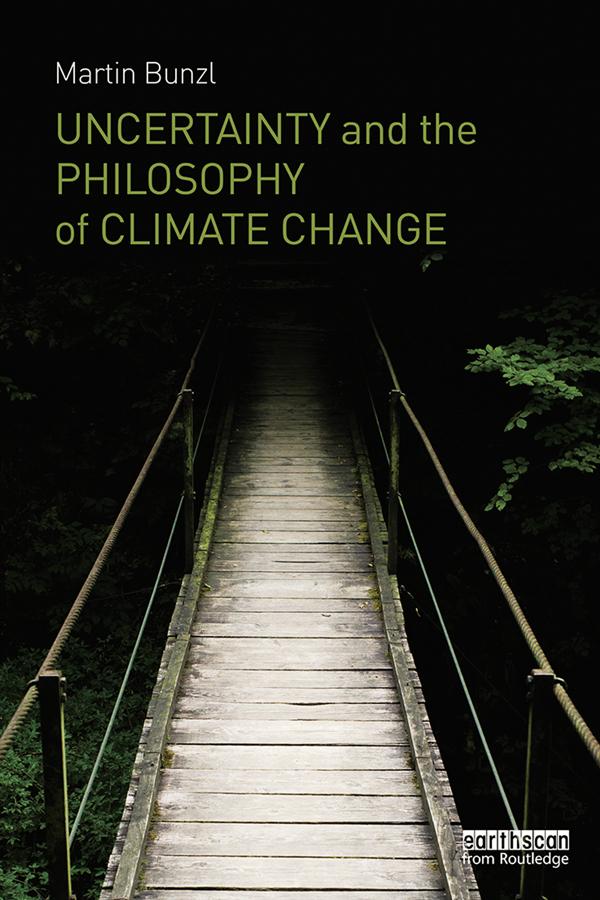
When it comes to climate change, the greatest difficulty we face is that we do not know the likely degree of change or its cost, which means that environmental policy decisions have to be made under uncertainty. This book offers an accessible philosophical treatment of the broad range of ethical and policy challenges posed by climate change uncertainty.
Drawing on both the philosophy of science and ethics, Martin Bunzl shows how tackling climate change revolves around weighing up our interests now against those of future generations, which requires that we examine our assumptions about the value of present costs versus future benefits. In an engaging, conversational style, Bunzl looks at questions such as our responsibility towards non-human life, the interests of the developing and developed worlds, and how the circumstances of poverty shape the perception of risk, ultimate developing and defending a view of humanity and its place in the world that makes sense of our duty to Nature without treating it as a rights bearer.
This book will be of interest to students and scholars of environmental studies, philosophy, politics and sociology as well as policy makers.
Betal nemt med kort, Klarna, Apple Pay eller Google Pay. Ikke tilfreds? Du har altid 14 dages fortrydelsesret. Læs mere i vores vilkår. Har du spørgsmål, så send os en mail på hello@memmo.org.
Memmo gør det nemmere at studere – uanset hvor du er i verden. Hos os samler du dine kursusbøger og smarte studieværktøjer ét sted: resuméer, quizzer, podcasts og flashcards. Og så er der Ted, din studieven, der svarer på alt, du undrer dig over. Over 50 000 studerende studerer allerede her – bygget til at hjælpe dig med at lære hurtigere og stresse mindre.