
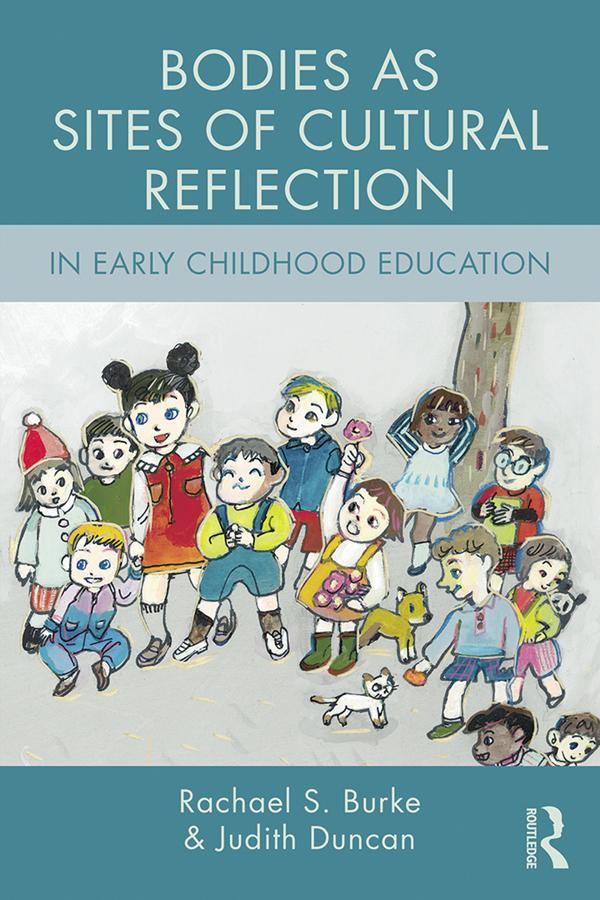
Taking the body as a locus for discussion, Rachael S. Burke and Judith Duncan argue not only that implicit cultural practices shape most of the interactions taking place in early childhood curricula and pedagogy but that many of these practices often go unnoticed or unrecognized as being pedagogy. Current scholars, inspired by Foucault, acknowledge that the body is socially and culturally produced and historically situated—it is simultaneously a part of nature and society as well as a representation of the way that nature and society can be conceived. Every natural symbol originating from the body contains and conveys a social meaning, and every culture selects its own meaning from the myriad of potential body symbolisms.
Bodies as Sites of Cultural Reflection in Early Childhood Education uses empirical examples from qualitative fieldwork conducted in New Zealand and Japan to explore these theories and discuss the ways in which children’s bodies represent a central focus in teachers’ pedagogical discussions and create contexts for the embodiment of children’s experiences in the early years.
Betal nemt med kort, Klarna, Apple Pay eller Google Pay. Ikke tilfreds? Du har altid 14 dages fortrydelsesret. Læs mere i vores vilkår. Har du spørgsmål, så send os en mail på hello@memmo.org.
Memmo gør det nemmere at studere – uanset hvor du er i verden. Hos os samler du dine kursusbøger og smarte studieværktøjer ét sted: resuméer, quizzer, podcasts og flashcards. Og så er der Ted, din studieven, der svarer på alt, du undrer dig over. Over 50 000 studerende studerer allerede her – bygget til at hjælpe dig med at lære hurtigere og stresse mindre.