
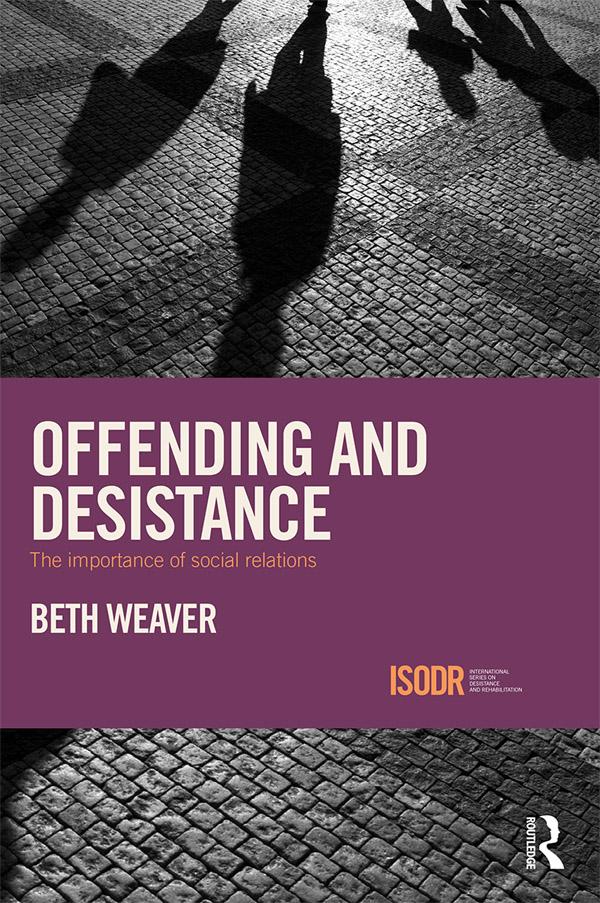
In Offending and Desistance, Beth Weaver examines the role of a co-offending peer group in shaping and influencing offending and desistance, focusing on three phases of their criminal careers: onset, persistence and desistance. While there is consensus across the body of desistance research that social relations have a role to play in variously constraining, enabling and sustaining desistance, no desistance studies have adequately analysed the dynamics or properties of social relations, or their relationship to individuals and social structures. This book aims to reset this balance.
By examining the social relations and life stories of six Scottish men (in their forties), Weaver reveals the central role of friendship groups, intimate relationships and families of formation, employment and religious communities. She shows how, for different individuals, these relations triggered reflexive evaluation of their priorities, behaviours and lifestyles, but with differing results.
Weaver’s re-examination of the relationships between structure, agency, identity and reflexivity in the desistance process ultimately illuminates new directions for research, policy and practice. This book is essential reading for academics and students engaged in the study of criminology and criminal justice, delinquency, probation and criminal law.
Betal nemt med kort, Klarna, Apple Pay eller Google Pay. Ikke tilfreds? Du har altid 14 dages fortrydelsesret. Læs mere i vores vilkår. Har du spørgsmål, så send os en mail på hello@memmo.org.
Memmo gør det nemmere at studere – uanset hvor du er i verden. Hos os samler du dine kursusbøger og smarte studieværktøjer ét sted: resuméer, quizzer, podcasts og flashcards. Og så er der Ted, din studieven, der svarer på alt, du undrer dig over. Over 50 000 studerende studerer allerede her – bygget til at hjælpe dig med at lære hurtigere og stresse mindre.