
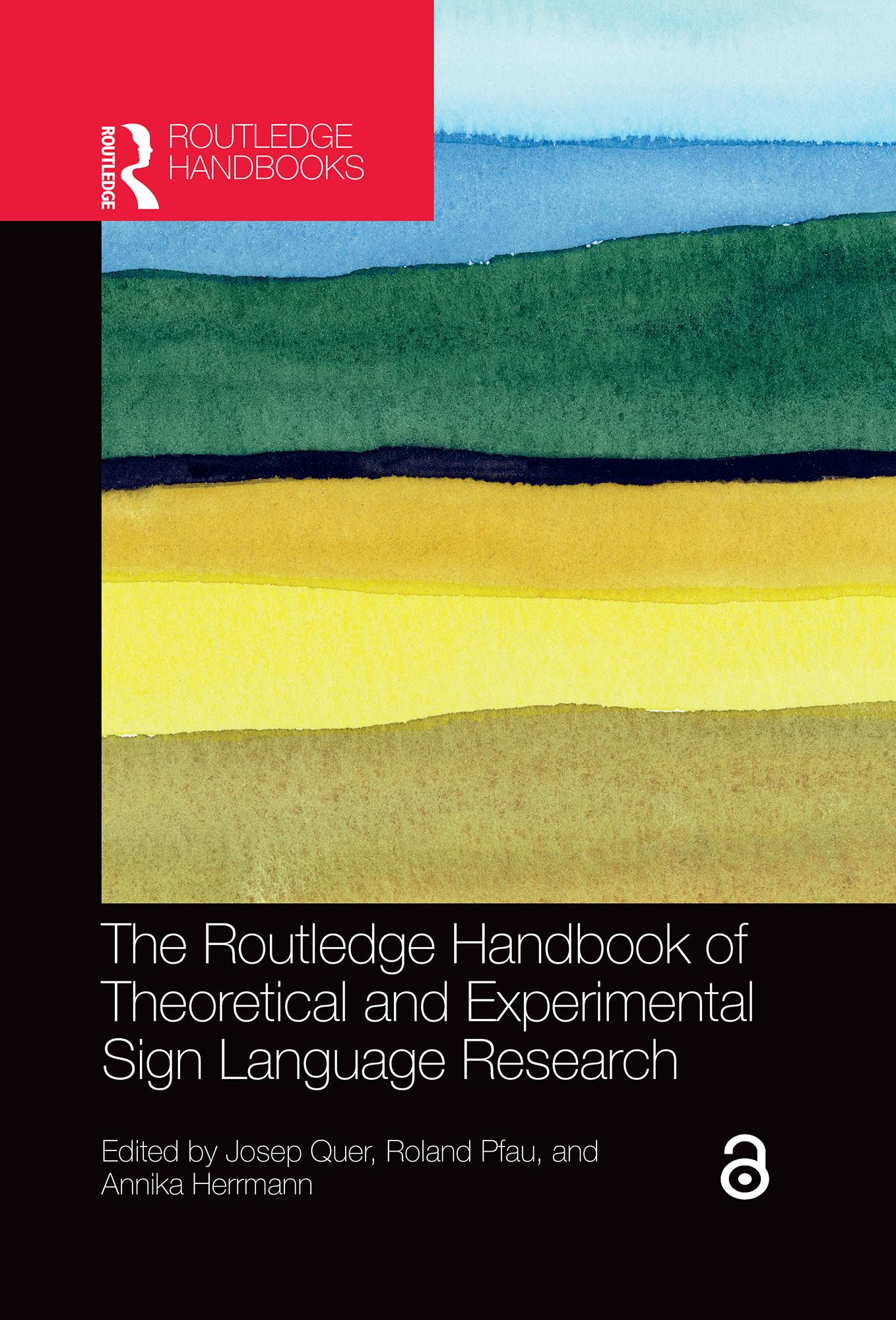
The Routledge Handbook of Theoretical and Experimental Sign Language Research bridges the divide between theoretical and experimental approaches to provide an up-to-date survey of key topics in sign language research. With 29 chapters written by leading and emerging scholars from around the world, this Handbook covers the following key areas:
- On the theoretical side, all crucial aspects of sign language grammar studied within formal frameworks such as Generative Grammar
- On the experimental side, theoretical accounts are supplemented by experimental evidence gained in psycho- and neurolinguistic studies
- On the descriptive side, the main phenomena addressed in the reviewed scholarship are summarized in a way that is accessible to readers without previous knowledge of sign languages
Each chapter features an introduction, an overview of existing research, and a critical assessment of hypotheses and findings. The Routledge Handbook of Theoretical and Experimental Sign Language Research is key reading for all advanced students and researchers working at the intersection of sign language research, linguistics, psycholinguistics, and neurolinguistics.
Chapters 5, 18 and 19 of this book are freely available as a downloadable Open Access PDF at http://www.taylorfrancis.com under a Creative Commons [Attribution-Non Commercial-No Derivatives (CC-BY-NC-ND)] 4.0 license.
Betal nemt med kort, Klarna, Apple Pay eller Google Pay. Ikke tilfreds? Du har altid 14 dages fortrydelsesret. Læs mere i vores vilkår. Har du spørgsmål, så send os en mail på hello@memmo.org.
Memmo gør det nemmere at studere – uanset hvor du er i verden. Hos os samler du dine kursusbøger og smarte studieværktøjer ét sted: resuméer, quizzer, podcasts og flashcards. Og så er der Ted, din studieven, der svarer på alt, du undrer dig over. Over 50 000 studerende studerer allerede her – bygget til at hjælpe dig med at lære hurtigere og stresse mindre.