
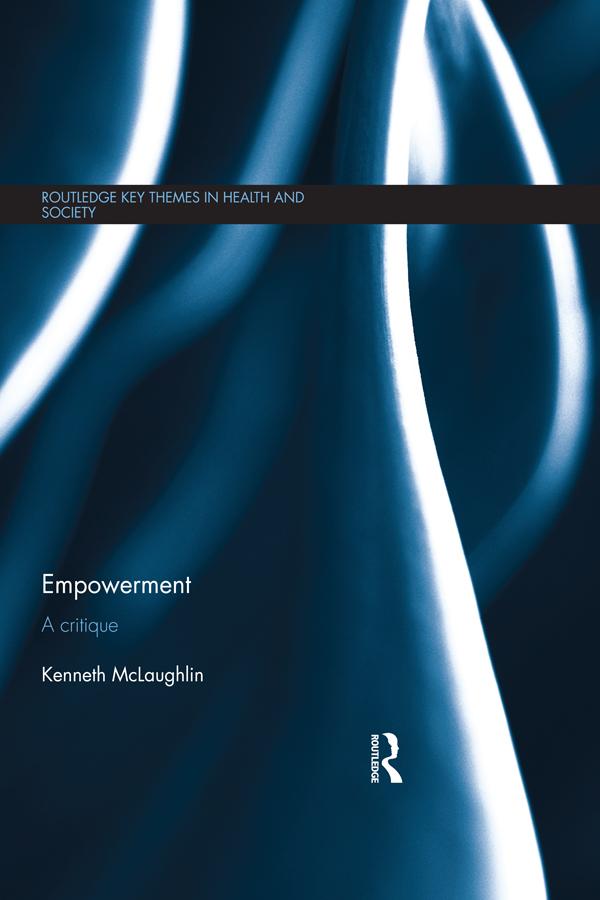
‘Empowerment’ is a term in widespread use today and one that is often considered to be a self-evident good. Here, McLaughlin explores its emergence in the 1960s through to its rise in the 1990s and ubiquity in present day discourse and interrogates its social status, paying particular attention to social policy, social work and health and social care discourse. He argues that a focus on empowerment has superseded the notion of political subjects exercising power autonomously.
This innovative volume:
- Discusses the relationship between concepts of empowerment and power, as they have been understood historically.
- Analyses changes in the conception and meaning of empowerment in relation to the shifting social and political landscape.
- Acknowledges the positive impact empowerment strategies have had on those who have campaigned to be empowered and also on those who have saw their role as being to help empower others.
- Highlights ways in which talk about empowerment can actually work in such a way as to further disempower those already marginalised.
Critically examining how ‘empowerment’ has become embedded in contemporary social and political life, this work offers a discussion of the term’s multiple meanings, what it actually entails, and how it constructs and positions those being empowered and those empowering.
Betal nemt med kort, Klarna, Apple Pay eller Google Pay. Ikke tilfreds? Du har altid 14 dages fortrydelsesret. Læs mere i vores vilkår. Har du spørgsmål, så send os en mail på hello@memmo.org.
Memmo gør det nemmere at studere – uanset hvor du er i verden. Hos os samler du dine kursusbøger og smarte studieværktøjer ét sted: resuméer, quizzer, podcasts og flashcards. Og så er der Ted, din studieven, der svarer på alt, du undrer dig over. Over 50 000 studerende studerer allerede her – bygget til at hjælpe dig med at lære hurtigere og stresse mindre.