
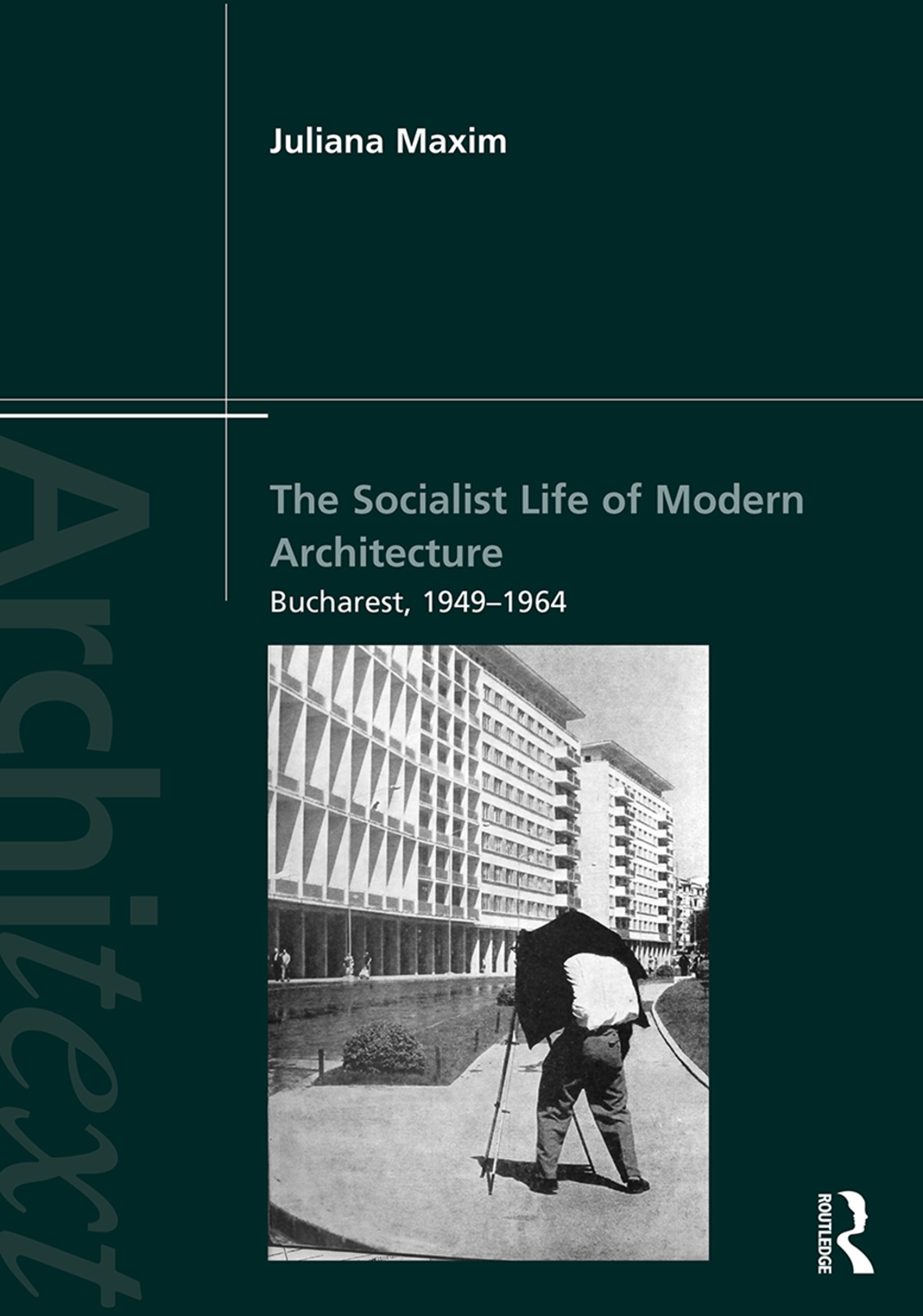
The Socialist Life of Modern Architecture is the first systematic architectural history of Romania under socialism written in English. It examines the mechanisms through which modern architecture was invested with political meaning and, in reverse, how specific architectural solutions came to define the socialist experience.
Each of the book’s three parts traces the historical development of one key aspect of Romania’s architectural culture between the years 1949–1964:
- the planning and construction of housing districts in Bucharest;
- the role of typification of design and standardization of construction in a project of cultural transformation;
- the production and management of a folk architectural tradition.
Going beyond buildings and architects to consider the use of photography, painting, and novels, as well as narrations of history and the formation of an ethnographic architectural heritage, the author explores how buildings came to participate in the cultural imagination of socialism—and became, in fact, a privileged medium of socialism.
Part of the growing interest in the significance of Soviet Bloc architecture, this is an important contribution to the fields of architectural history, cultural history, and visual culture.
Betal nemt med kort, Klarna, Apple Pay eller Google Pay. Ikke tilfreds? Du har altid 14 dages fortrydelsesret. Læs mere i vores vilkår. Har du spørgsmål, så send os en mail på hello@memmo.org.
Memmo gør det nemmere at studere – uanset hvor du er i verden. Hos os samler du dine kursusbøger og smarte studieværktøjer ét sted: resuméer, quizzer, podcasts og flashcards. Og så er der Ted, din studieven, der svarer på alt, du undrer dig over. Over 50 000 studerende studerer allerede her – bygget til at hjælpe dig med at lære hurtigere og stresse mindre.