
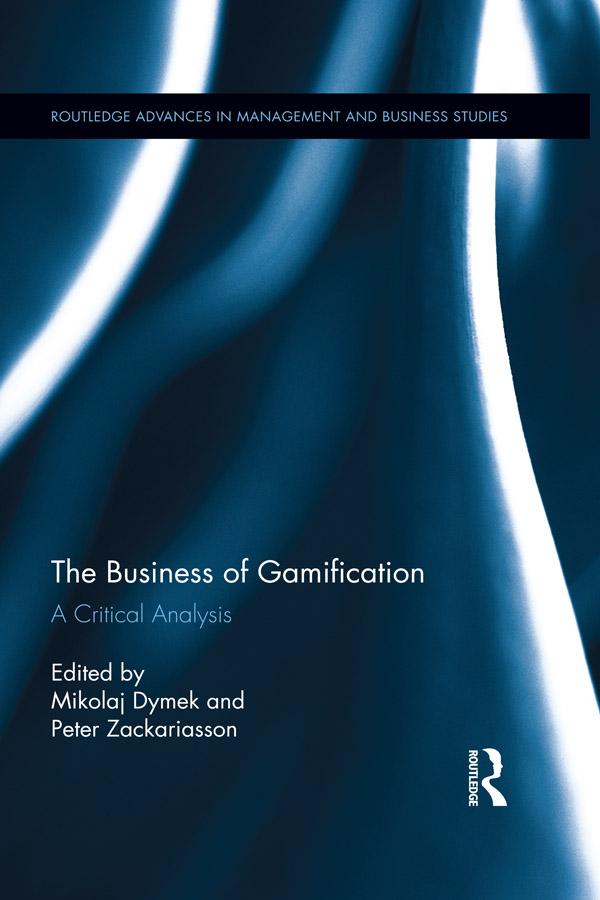
At the turn of the century the term "gamification" was introduced as a concept to understand the process of using game mechanics in "non-game" contexts. The impact of gamification was soon evident to business practices where it had impact both on marketing and, more broadly, on the organizations themselves. As the number of individuals playing video games grows, there seem to be an acceptance of game mechanics elsewhere. Its effectiveness is highly dependent on both technical possibilities and cultural acceptance, two factors present today.
The aim of The Business of Gamification is to critically analyze the practical and theoretical consequences of gamification. Practically, how has gamification been applied in businesses to this point, and what are the future scenarios? Theoretically, what are the contributions of gamification to existing academic knowledge? How does this change our understanding of how business are performing and its consequences, for organizations, consumers, and society in general?
This edited volume contains new, and stringent, perspectives on how gamification is contextualized in business settings, both in theory as well as in practice. This book will provide a wealth of research for individuals seriously interested in the industry at the academic level. As a result, this book will serve as a reference in curricula associated with video game development for years to come.
Betal nemt med kort, Klarna, Apple Pay eller Google Pay. Ikke tilfreds? Du har altid 14 dages fortrydelsesret. Læs mere i vores vilkår. Har du spørgsmål, så send os en mail på hello@memmo.org.
Memmo gør det nemmere at studere – uanset hvor du er i verden. Hos os samler du dine kursusbøger og smarte studieværktøjer ét sted: resuméer, quizzer, podcasts og flashcards. Og så er der Ted, din studieven, der svarer på alt, du undrer dig over. Over 50 000 studerende studerer allerede her – bygget til at hjælpe dig med at lære hurtigere og stresse mindre.