
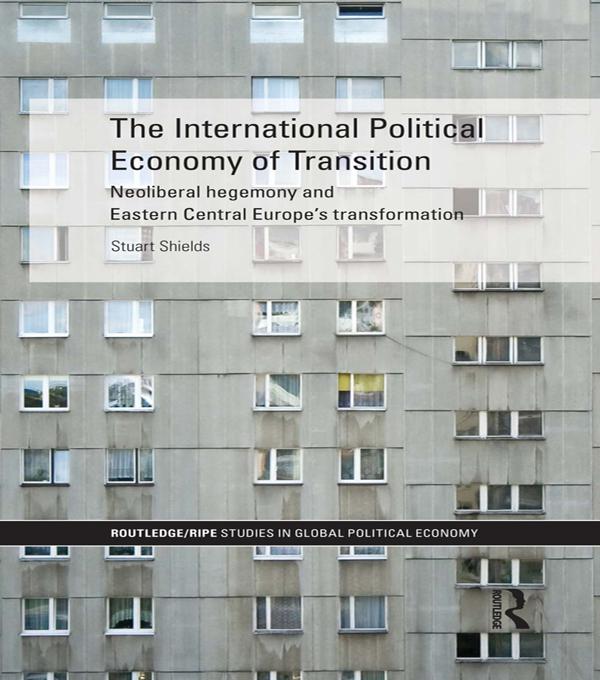
Shortlisted for the 2013 BISA IPEG Book Prize, this book explores how Eastern Europe’s post-communist transition can only be understood as part of a broader interrogation of neoliberal hegemony in the global political economy, and provides a detailed historical account of the emergence of neoliberalism in Eastern Central Europe.
Adopting an innovative Gramscian approach to post-communist transition, this book charts the rise to hegemony of neoliberal social forces. Using transition in Poland as a starting point, the author traces how particular social forces most intimately associated with transnational capital successful in the struggle over competing reform strategies. Transition is broken down into three stages; the "first wave" illustrates how the rise of particular social forces shaped by global change gave rise to a neoliberal strategy of capitalism from the 1970s. It goes on to show how the political economy of Europeanization, associated with EU enlargement instilled a "second wave" of neoliberalisation. Finally, exploring recent populist and left wing alternatives in the context of the current financial crisis, the book outlines how counter-hegemonic struggle might oppose a "third wave" neoliberalisation.
The International Political Economy of Transition will be of interest to students and scholars of international political economy, post-communist studies and European politics
Betal nemt med kort, Klarna, Apple Pay eller Google Pay. Ikke tilfreds? Du har altid 14 dages fortrydelsesret. Læs mere i vores vilkår. Har du spørgsmål, så send os en mail på hello@memmo.org.
Memmo gør det nemmere at studere – uanset hvor du er i verden. Hos os samler du dine kursusbøger og smarte studieværktøjer ét sted: resuméer, quizzer, podcasts og flashcards. Og så er der Ted, din studieven, der svarer på alt, du undrer dig over. Over 50 000 studerende studerer allerede her – bygget til at hjælpe dig med at lære hurtigere og stresse mindre.