
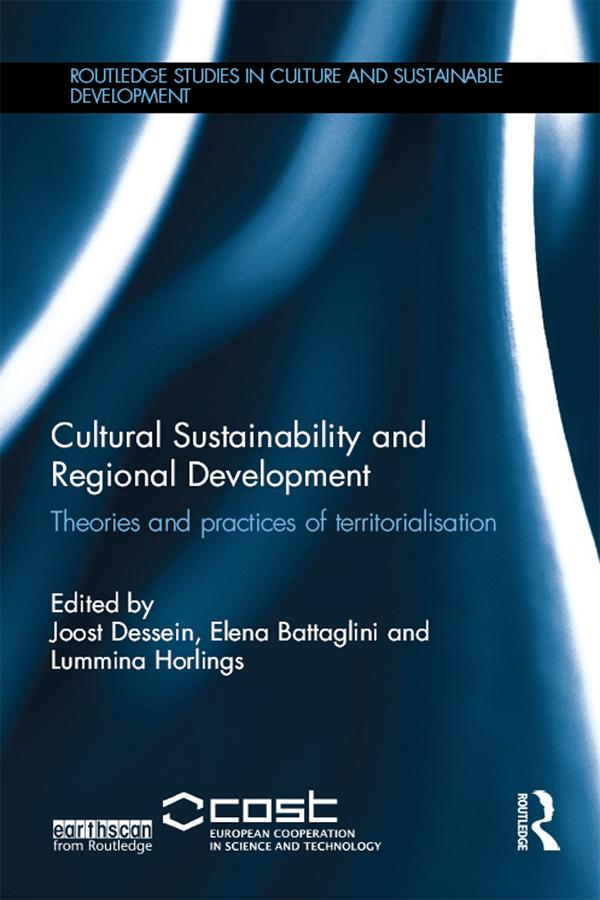
Meeting the aims of sustainability is becoming increasingly difficult; at the same time, the call for culture is becoming more powerful. This book explores the relationships between culture, sustainability and regional change through the concept of ‘territorialisation’. This new concept describes the dynamics and processes in the context of regional development, driven by collective human agency that stretches beyond localities and marked-off regional boundaries.
This book launches the concept of ‘territorialisation’ by exploring how the natural environment and culture are constitutive of each other. This concept allows us to study the characterisation of the natural assets of a place, the means by which the natural environment and culture interact, and how communities assign meaning to local assets, add functions and ascribe rules of how to use space. By highlighting the time-space dimension in the use and consumption of resources, territorialisation helps to frame the concept and grasp the meaning of sustainable regional development. Drawing on an international range of case studies, the book addresses both conceptual issues and practical applications of ‘territorialisation’ in a range of contexts, forms, and scales.
The book will be of great interest to researchers and postgraduates in sustainable development, environmental studies, and regional development and planning.
Betal nemt med kort, Klarna, Apple Pay eller Google Pay. Ikke tilfreds? Du har altid 14 dages fortrydelsesret. Læs mere i vores vilkår. Har du spørgsmål, så send os en mail på hello@memmo.org.
Memmo gør det nemmere at studere – uanset hvor du er i verden. Hos os samler du dine kursusbøger og smarte studieværktøjer ét sted: resuméer, quizzer, podcasts og flashcards. Og så er der Ted, din studieven, der svarer på alt, du undrer dig over. Over 50 000 studerende studerer allerede her – bygget til at hjælpe dig med at lære hurtigere og stresse mindre.