
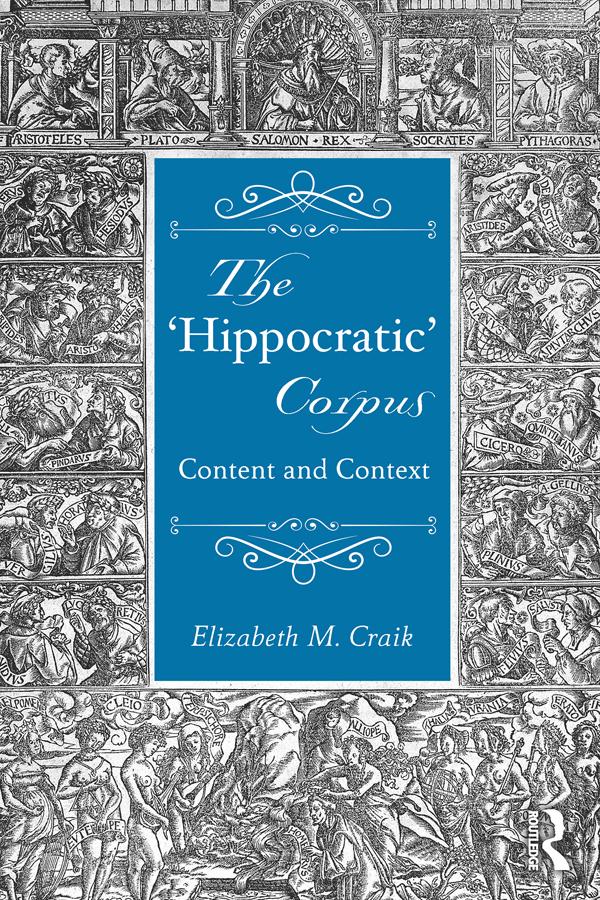
The Hippocratic Corpus comprises some sixty medical works of varying length, style and content. Collectively, this is the largest surviving body of early Greek prose. As such, it is an invaluable resource for scholars and students not only of ancient medicine but also of Greek life in general.
Hippocrates lived in the age of Socrates and most of the treatises seem to originate in the classical period. There is, however, no consensus on Hippocratic attribution. The ‘Hippocratic’ Corpus examines the works individually under the broad headings:
- content - each work is summarised for the reader
- comment - the substance and style of each work is discussed
- context is provided not just in relation to the corpus as a whole but also to the work’s wider relevance.
Whereas the scholar or student approaching, say, Euripides or Herodotus has a wealth of books available to provide introduction and orientation, no such study has existed for the Hippocratic Corpus. As The ‘Hippocratic’ Corpus has a substantial introduction, and as each work is summarised for the reader, it facilitates use and exploration of an important body of evidence by all interested in Greek medicine and society.
Elizabeth Craik is Honorary Professor at University of St Andrews and Visiting Professor at University of Newcastle, UK.
Betal nemt med kort, Klarna, Apple Pay eller Google Pay. Ikke tilfreds? Du har altid 14 dages fortrydelsesret. Læs mere i vores vilkår. Har du spørgsmål, så send os en mail på hello@memmo.org.
Memmo gør det nemmere at studere – uanset hvor du er i verden. Hos os samler du dine kursusbøger og smarte studieværktøjer ét sted: resuméer, quizzer, podcasts og flashcards. Og så er der Ted, din studieven, der svarer på alt, du undrer dig over. Over 50 000 studerende studerer allerede her – bygget til at hjælpe dig med at lære hurtigere og stresse mindre.