
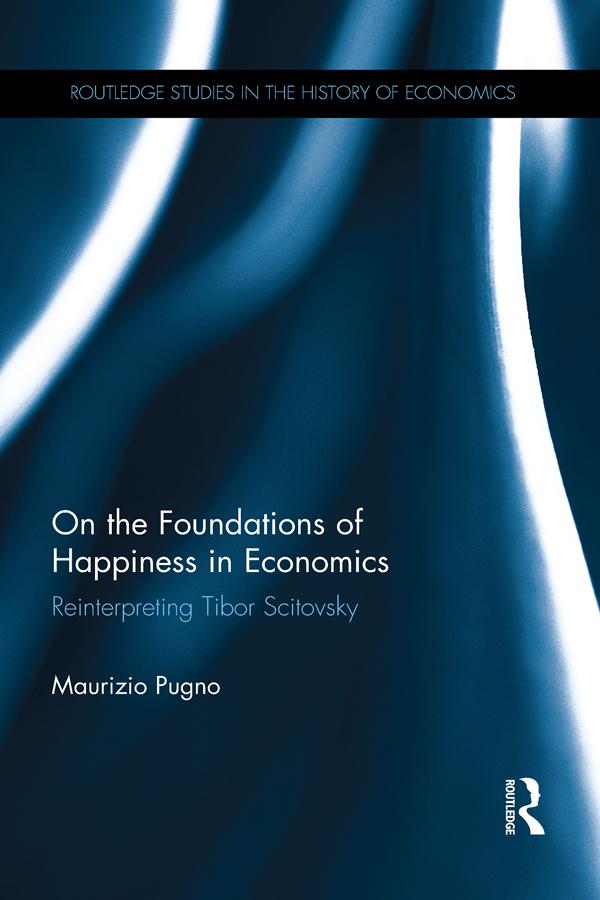
Economic growth has extraordinarily increased the availability of market goods to satisfy people’s need for comfort, but at the same time it has also raised great challenges to their working and family life. Will people learn the skill necessary to cope with these challenges and draw full enjoyment from economic growth? On the Foundations of Happiness in Economics explores this question by examining the work of Tibor Scitovsky, author of The Joyless Economy.
Given the recent rise of behavioural economics and happiness economics, this book aims to show how far ahead of his time Scitovsky was in his work on individual welfare (or wellbeing). It traces the evolution of Scitovsky’s original thought, arguing that he has been frequently misunderstood, before undertaking formal analysis in order to demonstrate how far his work anticipated or even went beyond the recent advances in economics. This volume also explores Scitovsky’s work in the context of Keynes’ work on wellbeing, offering a new perspective on welfare in the history of economic thought. Other issues discussed in this text regard creativity and social skills, hedonism and eudaimonia, parenting and education, addiction, work/leisure balance, policies for happiness, paternalism, and the quality of economic growth.
This book addresses a variety of readers, such as those interested in the history of economics, as well as students and researchers concerned with the economic theory of well-being.
Betal nemt med kort, Klarna, Apple Pay eller Google Pay. Ikke tilfreds? Du har altid 14 dages fortrydelsesret. Læs mere i vores vilkår. Har du spørgsmål, så send os en mail på hello@memmo.org.
Memmo gør det nemmere at studere – uanset hvor du er i verden. Hos os samler du dine kursusbøger og smarte studieværktøjer ét sted: resuméer, quizzer, podcasts og flashcards. Og så er der Ted, din studieven, der svarer på alt, du undrer dig over. Over 50 000 studerende studerer allerede her – bygget til at hjælpe dig med at lære hurtigere og stresse mindre.