
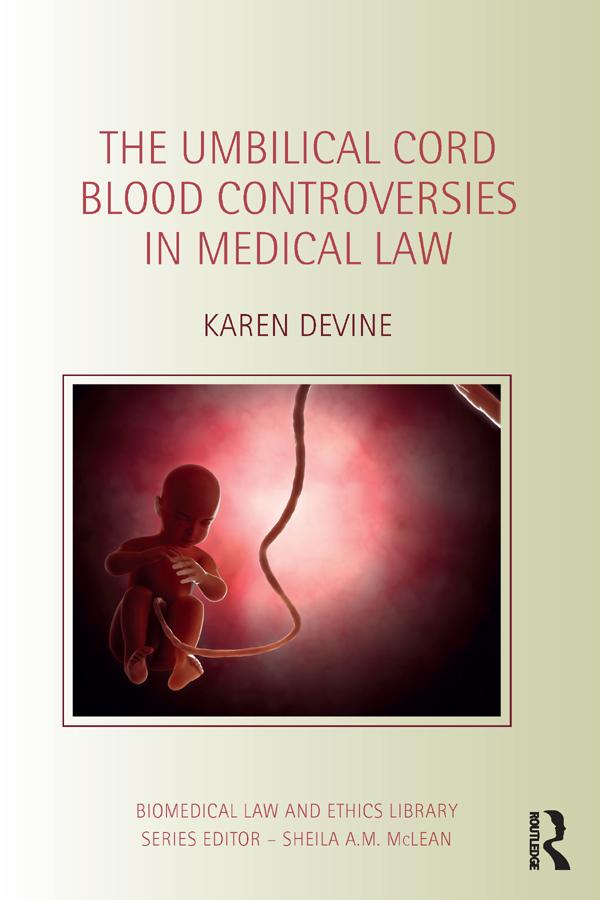
Since the therapeutic value of umbilical cord blood (UCB) stem cells was first recognised in the late 1980s, there has been a proliferation of both public and private UCB banks worldwide. However, the ability to utilise such a potentially valuable resource has provoked a number of controversies. In a distinctly accessible style, this book unpacks the socio-legal implications of the UCB collection process and constructs a detailed analysis of the law and ethics that surrounds UCB banking in the UK, including ownership of the cells. Its enquiry is located within the theoretical framework of altruism versus self-interest and explores the notions of risk and choice associated with this distinctive blend of public/private healthcare provision. The book evaluates the impact of the Human Tissue Act 2004 and the European Union Tissues and Cells Directive (2004/23/EC) on the UCB industry and provides a unique insight into the effect that the law may have on the NHS whose maternity staff and premises are used to collect UCB. This book would be of interest primarily to a UK readership in addition to expectant families, health professionals, students, academics, practitioners and the UCB industry elsewhere in the world.
Betal nemt med kort, Klarna, Apple Pay eller Google Pay. Ikke tilfreds? Du har altid 14 dages fortrydelsesret. Læs mere i vores vilkår. Har du spørgsmål, så send os en mail på hello@memmo.org.
Memmo gør det nemmere at studere – uanset hvor du er i verden. Hos os samler du dine kursusbøger og smarte studieværktøjer ét sted: resuméer, quizzer, podcasts og flashcards. Og så er der Ted, din studieven, der svarer på alt, du undrer dig over. Over 50 000 studerende studerer allerede her – bygget til at hjælpe dig med at lære hurtigere og stresse mindre.