
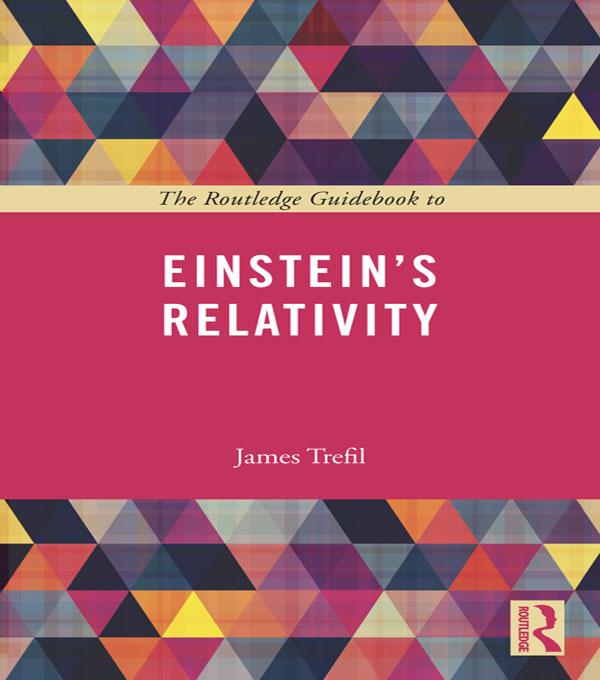
Albert Einstein, one of the most prolific scientists of the twentieth century, developed the theory of relativity which was crucial for the advancement of modern physics. Young Einstein identified a paradox between Newtonian Mechanics and Maxwell’s equations which pointed to a flawed understanding of space and time by the scientists of the day. In Relativity, Einstein presents his findings using a minimal amount of mathematical language, but the text can still be challenging for readers who lack an extensive scientific background.
The Routledge Guidebook to Einstein’s Relativity expands on and supplements this seminal text, by exploring:
- the historical context of Einstein’s work and the background to his breakthroughs
- details of experimental verification of special and general relativity
- the enduring legacy of Einstein’s theories and their implications for future scientific breakthroughs.
This is an essential introduction for students of physics, philosophy and history in understanding the key elements of the work and the importance of this classic text to society today.
Betal nemt med kort, Klarna, Apple Pay eller Google Pay. Ikke tilfreds? Du har altid 14 dages fortrydelsesret. Læs mere i vores vilkår. Har du spørgsmål, så send os en mail på hello@memmo.org.
Memmo gør det nemmere at studere – uanset hvor du er i verden. Hos os samler du dine kursusbøger og smarte studieværktøjer ét sted: resuméer, quizzer, podcasts og flashcards. Og så er der Ted, din studieven, der svarer på alt, du undrer dig over. Over 50 000 studerende studerer allerede her – bygget til at hjælpe dig med at lære hurtigere og stresse mindre.