
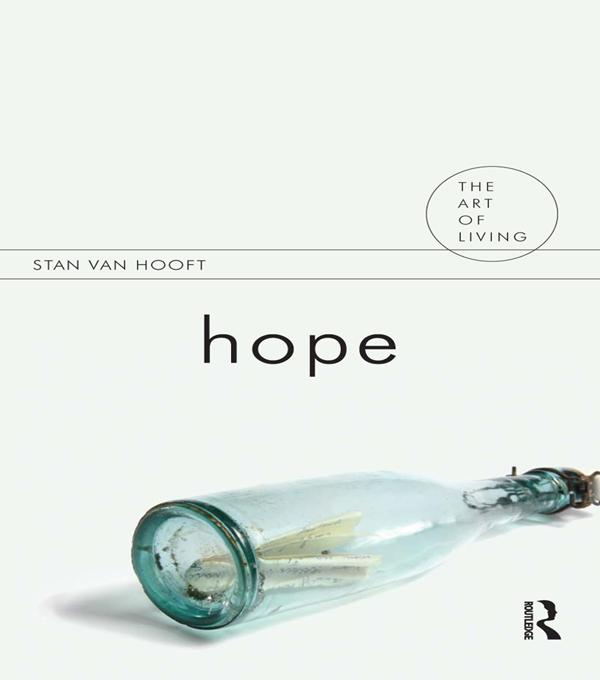
From the now iconic Barack Obama 'Hope' poster of the 2008 presidential campaign to the pit-head 'Camp Hope' of the families of the trapped Chilean miners, the language of hope can be hugely powerful as it draws on resources that are uniquely human and universal. We are beings who hope. But what does that say about us? What is hope and what role does it play in our lives? In his fascinating and thought-provoking investigation into the meaning of hope, Stan van Hooft shows that hope is a fundamental structure of the way we live our lives. For Aristotle being hopeful was part of a well-lived life, a virtue. For Aquinas it was a fundamentally theological virtue and for Kant a basic moral motivation. It shapes how we view ourselves and the world in which we live. Whether we hope for a life after death or for good weather tomorrow - whether our hopes are grand or humble - hoping is part of our outlook on life. What we hope for defines who we are. Drawing on everyday examples as well as more detailed discussion of hope in the arenas of medicine, politics and religion, van Hooft shows how hopefulness in not the same as hope and offers a convincing and powerful defense of the need for realism. There are few contemporary philosophical discussions of hope and Stan van Hooft's book offers an accessible and insightful discussion of the topic that shows the relevance of philosophical thinking and distinctions to this important aspect of human life.
Betal nemt med kort, Klarna, Apple Pay eller Google Pay. Ikke tilfreds? Du har altid 14 dages fortrydelsesret. Læs mere i vores vilkår. Har du spørgsmål, så send os en mail på hello@memmo.org.
Memmo gør det nemmere at studere – uanset hvor du er i verden. Hos os samler du dine kursusbøger og smarte studieværktøjer ét sted: resuméer, quizzer, podcasts og flashcards. Og så er der Ted, din studieven, der svarer på alt, du undrer dig over. Over 50 000 studerende studerer allerede her – bygget til at hjælpe dig med at lære hurtigere og stresse mindre.
Du kan måske også lide
Køb bogen0