
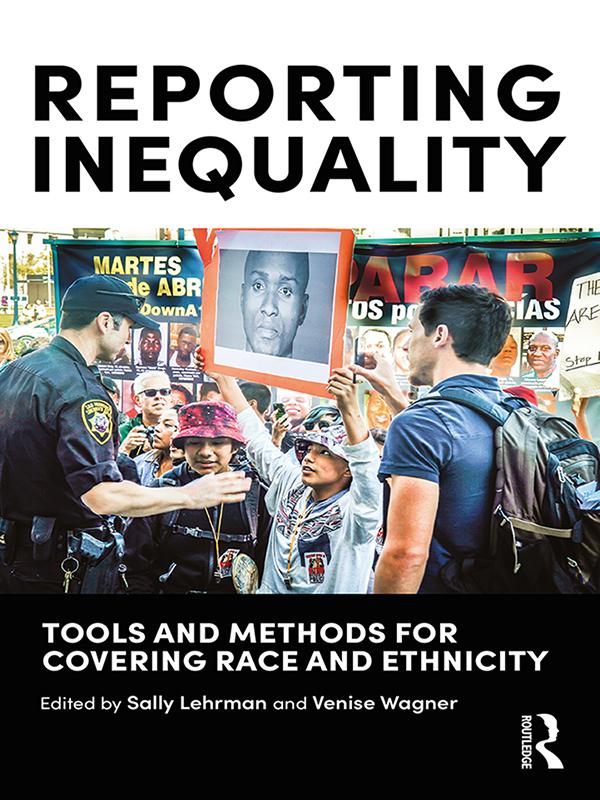
Under increasingly intense newsroom demands, reporters often find it difficult to cover the complexity of topics that deal with racial and social inequality. This path-breaking book lays out simple, effective reporting strategies that equip journalists to investigate disparity’s root causes.
Chapters discuss how racially disparate outcomes in health, education, wealth/income, housing, and the criminal justice system are often the result of inequity in opportunity and also provide theoretical frameworks for understanding the roots of racial inequity. Examples of model reporting from ProPublica, the Center for Public Integrity, and the San Jose Mercury News showcase best practice in writing while emphasizing community-based reporting. Throughout the book, tools and practical techniques such as the Fault Lines framework, the Listening Post and the authors' Opportunity Index and Upstream-Downstream Framework all help journalists improve their awareness and coverage of structural inequity at a practical level.
For students and journalists alike, Reporting Inequality is an ideal resource for understanding how to cover structures of injustice with balance and precision.
Betal nemt med kort, Klarna, Apple Pay eller Google Pay. Ikke tilfreds? Du har altid 14 dages fortrydelsesret. Læs mere i vores vilkår. Har du spørgsmål, så send os en mail på hello@memmo.org.
Memmo gør det nemmere at studere – uanset hvor du er i verden. Hos os samler du dine kursusbøger og smarte studieværktøjer ét sted: resuméer, quizzer, podcasts og flashcards. Og så er der Ted, din studieven, der svarer på alt, du undrer dig over. Over 50 000 studerende studerer allerede her – bygget til at hjælpe dig med at lære hurtigere og stresse mindre.