
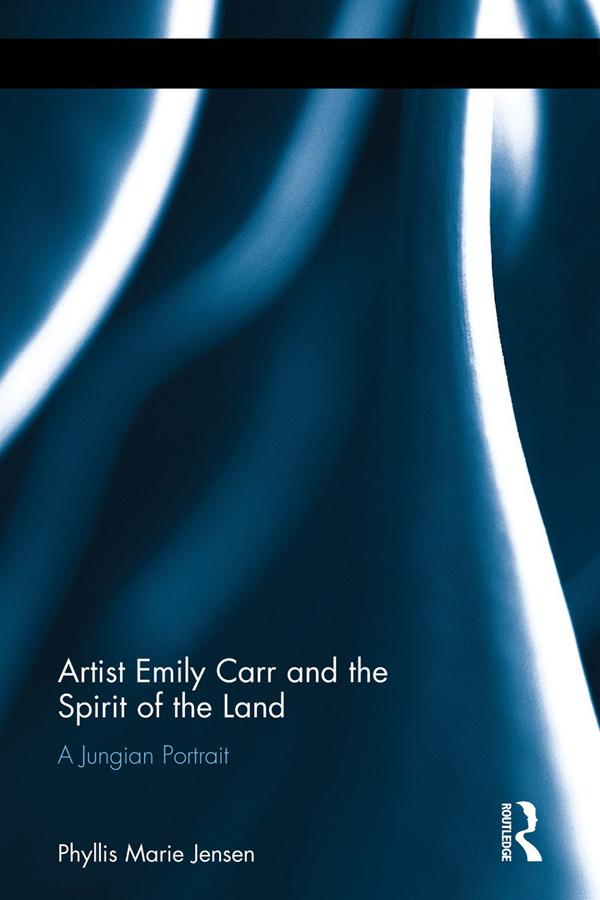
Emily Carr, often called Canada’s Van Gogh, was a post-impressionist explorer, artist and writer. In Artist Emily Carr and the Spirit of the Land Phyllis Marie Jensen draws on analytical psychology and the theories of feminism and social constructionism for insights into Carr’s life in the late Victorian period and early twentieth century.
Presented in two parts, the book introduces Carr’s émigré English family and childhood on the "edge of nowhere" and her art education in San Francisco, London and Paris. Travels in the wilderness introduced her to the totem art of the Pacific Northwest coast at a time Aboriginal art was undervalued and believed to be disappearing. Carr vowed to document it before turning to spirited landscapes of forest, sea and sky. The second part of the book presents a Jungian portrait of Carr, including typology, psychological complexes, and archetypal features of personality. An examination the individuation process and Carr’s embracement of transcendental philosophy reveals the richness of her personality and artistic genius.
Artist Emily Carr and the Spirit of the Land provides captivating reading for analytical psychologists, academics and students of Jungian studies, art history, health, gender and women’s studies.
Betal nemt med kort, Klarna, Apple Pay eller Google Pay. Ikke tilfreds? Du har altid 14 dages fortrydelsesret. Læs mere i vores vilkår. Har du spørgsmål, så send os en mail på hello@memmo.org.
Memmo gør det nemmere at studere – uanset hvor du er i verden. Hos os samler du dine kursusbøger og smarte studieværktøjer ét sted: resuméer, quizzer, podcasts og flashcards. Og så er der Ted, din studieven, der svarer på alt, du undrer dig over. Over 50 000 studerende studerer allerede her – bygget til at hjælpe dig med at lære hurtigere og stresse mindre.