
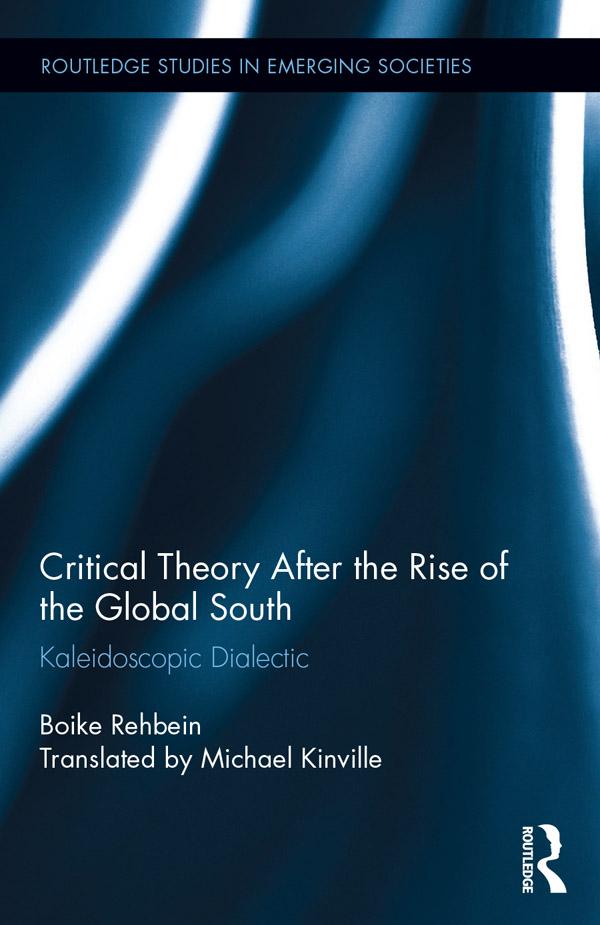
After the end of Euro-American hegemony and the return of the multi-centric world, Eurocentrism in philosophy and the social sciences has come under attack. However, no real alternative has been proposed. This provides an opportunity to reassess the philosophy of the social sciences that has been developed in the West. This book argues that the re-emergence of a multi-centric world allows the Euro-centric social sciences in general, and critical theory in particular, to finally disengage from countless paradoxes and impasses by which they have heretofore been hindered. The author presents a solution in the form of the "kaleidoscopic dialectic." This dialectic is unique in that it is able to overcome the precarious dichotomy between universalism and relativism by relying on an original approach to the philosophy of science. With this approach, the focus is on the configurations embedded in the ethics of understanding, accommodation and learning and on their connections to broader social scientific critique. This book demands that the European social sciences make philosophical and methodological adaptations to the new realities of the social world by becoming more reflexive and, by extension, less Euro-centric.
Betal nemt med kort, Klarna, Apple Pay eller Google Pay. Ikke tilfreds? Du har altid 14 dages fortrydelsesret. Læs mere i vores vilkår. Har du spørgsmål, så send os en mail på hello@memmo.org.
Memmo gør det nemmere at studere – uanset hvor du er i verden. Hos os samler du dine kursusbøger og smarte studieværktøjer ét sted: resuméer, quizzer, podcasts og flashcards. Og så er der Ted, din studieven, der svarer på alt, du undrer dig over. Over 50 000 studerende studerer allerede her – bygget til at hjælpe dig med at lære hurtigere og stresse mindre.