
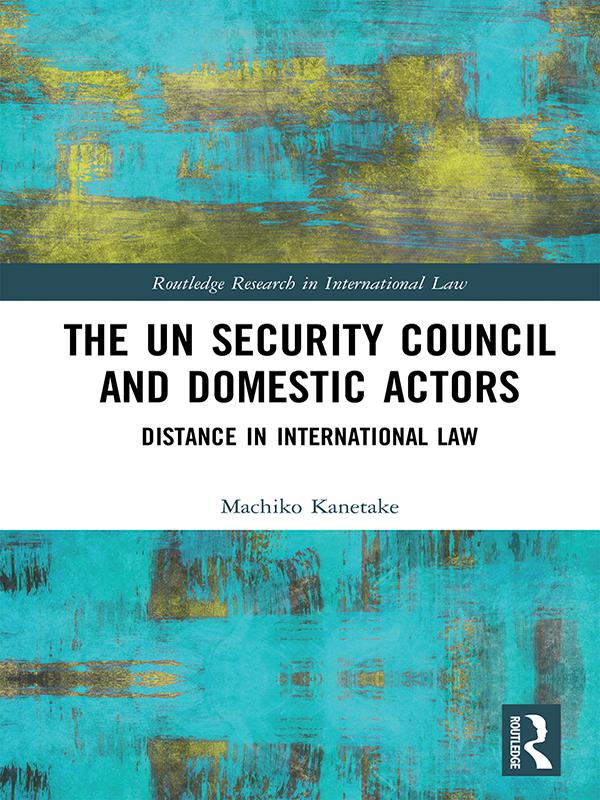
This book analyses the exercise of authority by the UN Security Council and its subsidiary organs over individuals. The UN Security Council was created in 1945 as an outcome of World War II under the predominant assumption that it exercises its authority against states. Under this assumption, the UN Security Council and those individuals were ‘distanced’ by the presence of member states that intermediate between the Security Council’s international commands and those individuals that are subject to member states’ domestic law. However, in practice, the UN Security Council’s exercise of authority has incrementally removed the presence of state intermediaries and reduced the Security Council’s distance to individuals.
This book demonstrates that this phenomenon has increased the relevance of domestic law in developing the international normative frameworks governing the UN Security Council and its subsidiary organs in safeguarding the rights, obligations, and interests of those affected individuals. This book presents how the UN Security Council’s exercise of authority has been received at the domestic level, and what would be the international implications of the Security Council’s extensive encounter with the actors who primarily reside in a domestic legal order.
Betal nemt med kort, Klarna, Apple Pay eller Google Pay. Ikke tilfreds? Du har altid 14 dages fortrydelsesret. Læs mere i vores vilkår. Har du spørgsmål, så send os en mail på hello@memmo.org.
Memmo gør det nemmere at studere – uanset hvor du er i verden. Hos os samler du dine kursusbøger og smarte studieværktøjer ét sted: resuméer, quizzer, podcasts og flashcards. Og så er der Ted, din studieven, der svarer på alt, du undrer dig over. Over 50 000 studerende studerer allerede her – bygget til at hjælpe dig med at lære hurtigere og stresse mindre.