
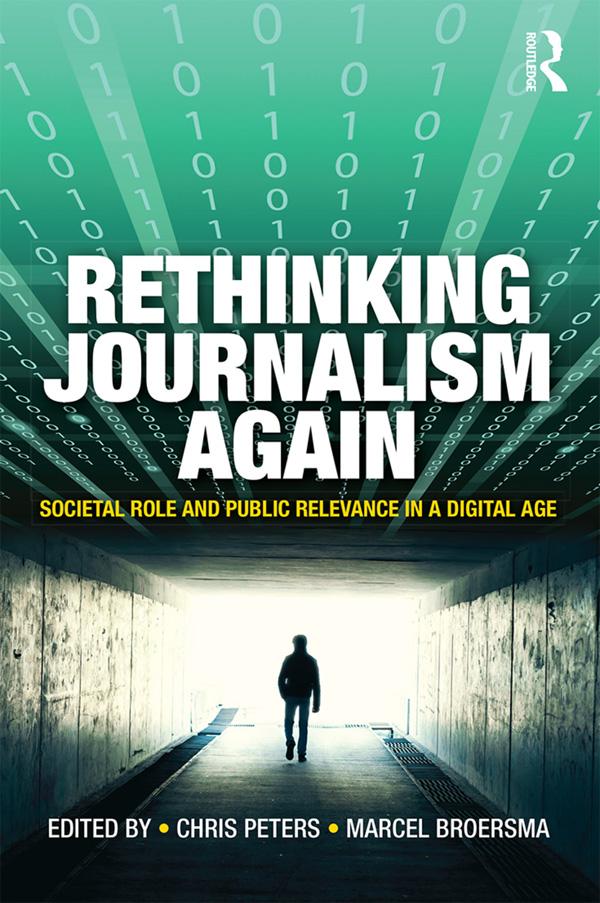
It’s easy to make a rhetorical case for the value of journalism. Because, it is a necessary precondition for democracy; it speaks to the people and for the people; it informs citizens and enables them to make rational decisions; it functions as their watchdog on government and other powers that be.
But does rehashing such familiar rationales bring journalism studies forward? Does it contribute to ongoing discussions surrounding journalism’s viability going forth? For all their seeming self-evidence, this book considers what bearing these old platitudes have in the new digital era. It asks whether such hopeful talk really reflects the concrete roles journalism now performs for people in their everyday lives. In essence, it poses questions that strike at the core of the idea of journalism itself. Is there a singular journalism that has one well-defined role in society? Is its public mandate as strong as we think?
The internationally-renowned scholars comprising the collection address these recurring concerns that have long-defined the profession and which journalism faces even more acutely today. By discussing what journalism was, is, and (possibly) will be, this book highlights key contemporary areas of debate and tackles on-going anxieties about its future.
Betal nemt med kort, Klarna, Apple Pay eller Google Pay. Ikke tilfreds? Du har altid 14 dages fortrydelsesret. Læs mere i vores vilkår. Har du spørgsmål, så send os en mail på hello@memmo.org.
Memmo gør det nemmere at studere – uanset hvor du er i verden. Hos os samler du dine kursusbøger og smarte studieværktøjer ét sted: resuméer, quizzer, podcasts og flashcards. Og så er der Ted, din studieven, der svarer på alt, du undrer dig over. Over 50 000 studerende studerer allerede her – bygget til at hjælpe dig med at lære hurtigere og stresse mindre.