
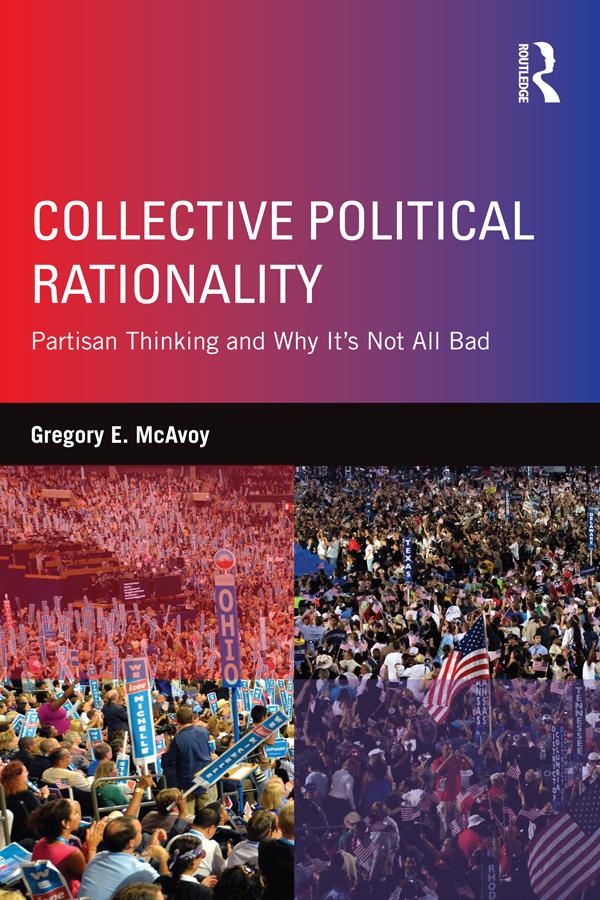
Amidst the polarization of contemporary politics, partisan loyalties among citizens are regarded as one contributor to political stalemate. Partisan loyalties lead Democrats and Republicans to look at the same economic information but to come to strikingly different conclusions about the state of the economy and the performance of the president in managing it. As a result, many observers argue that democratic politics would work better if citizens would shed their party loyalty and more dispassionately assess political and economic news.
In this book, Gregory E. McAvoy argues—contra this conventional wisdom; that partisanship is a necessary feature of modern politics, making it feasible for citizens to make some sense of the vast number of issues that make their way onto the political agenda. Using unique data, he shows that the biases and distortions that partisanship introduces to collective opinion are real, but despite them, collective opinion changes meaningfully in response to economic and political news. In a comparison of the public’s assessment of the economy to those of economic experts, he finds a close correspondence between the two over time, and that in modern democracies an informed public will also necessarily be partisan.
Modernizing the study of collective opinion, McAvoy's book is essential reading for scholars of American Public Opinion and Political Behavior.
Betal nemt med kort, Klarna, Apple Pay eller Google Pay. Ikke tilfreds? Du har altid 14 dages fortrydelsesret. Læs mere i vores vilkår. Har du spørgsmål, så send os en mail på hello@memmo.org.
Memmo gør det nemmere at studere – uanset hvor du er i verden. Hos os samler du dine kursusbøger og smarte studieværktøjer ét sted: resuméer, quizzer, podcasts og flashcards. Og så er der Ted, din studieven, der svarer på alt, du undrer dig over. Over 50 000 studerende studerer allerede her – bygget til at hjælpe dig med at lære hurtigere og stresse mindre.