
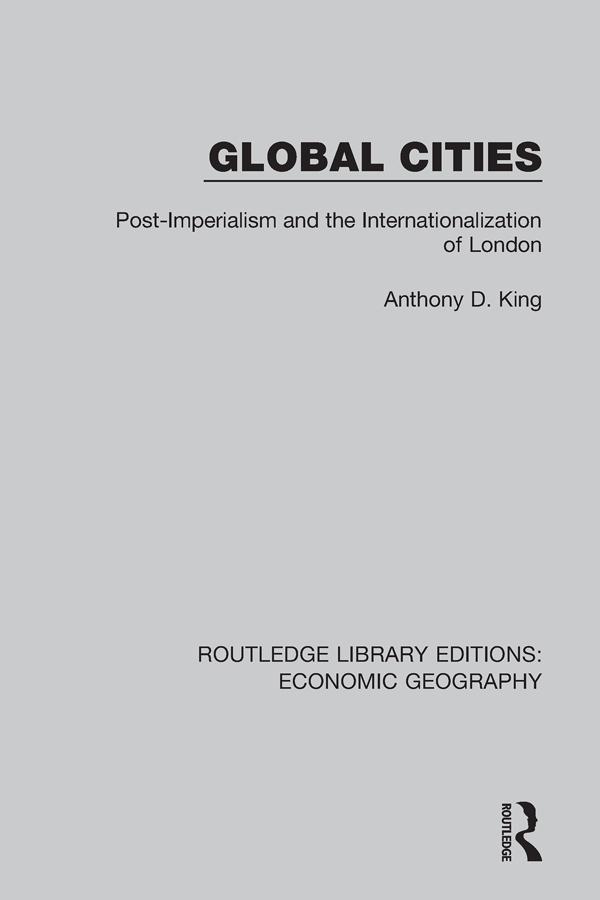
Since the late 1970s the role of key world cities such as Los Angeles, New York and London as centres of global control and co-ordination has come under increasing scrutiny. This book provides an overview and critique of work on the global context of metropolitan growth, world city formation and the theory it has generated. Suggesting ‘post-imperialism’ as the most appropriate framework for analysis, the author demonstrates the extent to which urban and regional development, both in Britain and elsewhere, were linked to a colonial mode of production, and highlights the effects of its disappearance. Against this background, the author charts the transformation of London from imperial capital in the nineteenth and early twentieth centuries to world city in the capitalist world economy of today.
Betal nemt med kort, Klarna, Apple Pay eller Google Pay. Ikke tilfreds? Du har altid 14 dages fortrydelsesret. Læs mere i vores vilkår. Har du spørgsmål, så send os en mail på hello@memmo.org.
Memmo gør det nemmere at studere – uanset hvor du er i verden. Hos os samler du dine kursusbøger og smarte studieværktøjer ét sted: resuméer, quizzer, podcasts og flashcards. Og så er der Ted, din studieven, der svarer på alt, du undrer dig over. Over 50 000 studerende studerer allerede her – bygget til at hjælpe dig med at lære hurtigere og stresse mindre.