
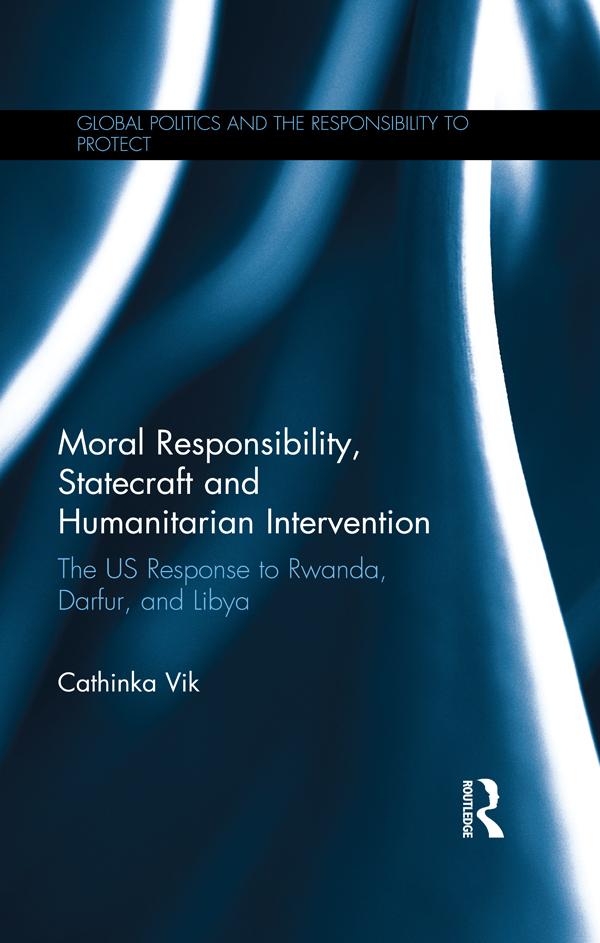
This book explores the moral complexity of statecraft in the context of decision-making on armed intervention in the post-Cold War era.
This book adds to the debate on humanitarian intervention by analyzing the moral complexity of statecraft when confronted with situations of severe human rights violations. Through a comparative case study of President Bill Clinton administration’s failure to intervene in the Rwanda genocide (1994), the George W. Bush administration’s tepid response to the Darfur atrocities (2003-07), and the Barack Obama administration’s leadership behind the limited U.N. intervention in Libya (2011), it explores the factors – domestic and international – that influence decision-making about humanitarian intervention. These cases show, not only how international moral concerns often compete with interest-based and domestic concerns, but how decision-makers are often confronted by competing moral imperatives. In such situations, it is often not clear which imperatives should be followed. In an increasingly interconnected world, this book examines how we expect state leaders to balance different moral responsibilities.
This book will be of much interest to students of humanitarian intervention, the Responsibility to Protect, human rights, US foreign policy, African politics and IR in general.
Betal nemt med kort, Klarna, Apple Pay eller Google Pay. Ikke tilfreds? Du har altid 14 dages fortrydelsesret. Læs mere i vores vilkår. Har du spørgsmål, så send os en mail på hello@memmo.org.
Memmo gør det nemmere at studere – uanset hvor du er i verden. Hos os samler du dine kursusbøger og smarte studieværktøjer ét sted: resuméer, quizzer, podcasts og flashcards. Og så er der Ted, din studieven, der svarer på alt, du undrer dig over. Over 50 000 studerende studerer allerede her – bygget til at hjælpe dig med at lære hurtigere og stresse mindre.