
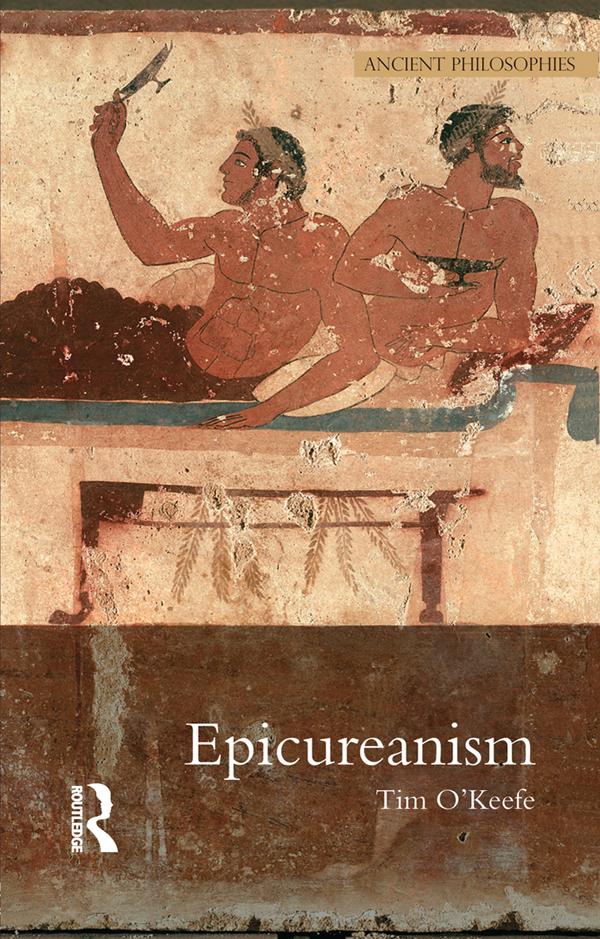
The Epicurean school of philosophy was one of the dominant philosophies of the Hellenistic period. Founded by Epicurus of Samos (century 341-270 BCE) it was characterized by an empiricist epistemology and a hedonistic ethics. This new introduction to Epicurus offers readers clear exposition of the central tenets of Epicurus' philosophy, with particular stress placed on those features that have enduring philosophical interest and where parallels can be drawn with debates in contemporary analytic philosophy. Part 1 of the book examines the fundamentals of Epicurus' metaphysics, including atoms and the void, emergent and sensible properties, cosmology, mechanistic biology, the nature and functioning of the mind, death, and freedom of action. Part 2 explores Epicurus' epistemology, including his arguments against scepticism and his ideas on sensations, preconceptions and feelings. The final part deals with Epicurus' ethics, exploring his arguments for hedonism, his distinctive conceptions of types of pleasure and desire, his belief in virtue, his notions of justice, friendship and his theology. O'Keefe provides extended exegesis of the arguments supporting Epicurus' positions, indicating their strengths and weaknesses, while showing the connections between the various parts of his philosophy and how Epicureanism hangs together as a whole.
Betal nemt med kort, Klarna, Apple Pay eller Google Pay. Ikke tilfreds? Du har altid 14 dages fortrydelsesret. Læs mere i vores vilkår. Har du spørgsmål, så send os en mail på hello@memmo.org.
Memmo gør det nemmere at studere – uanset hvor du er i verden. Hos os samler du dine kursusbøger og smarte studieværktøjer ét sted: resuméer, quizzer, podcasts og flashcards. Og så er der Ted, din studieven, der svarer på alt, du undrer dig over. Over 50 000 studerende studerer allerede her – bygget til at hjælpe dig med at lære hurtigere og stresse mindre.
Du kan måske også lide
Køb bogen0