
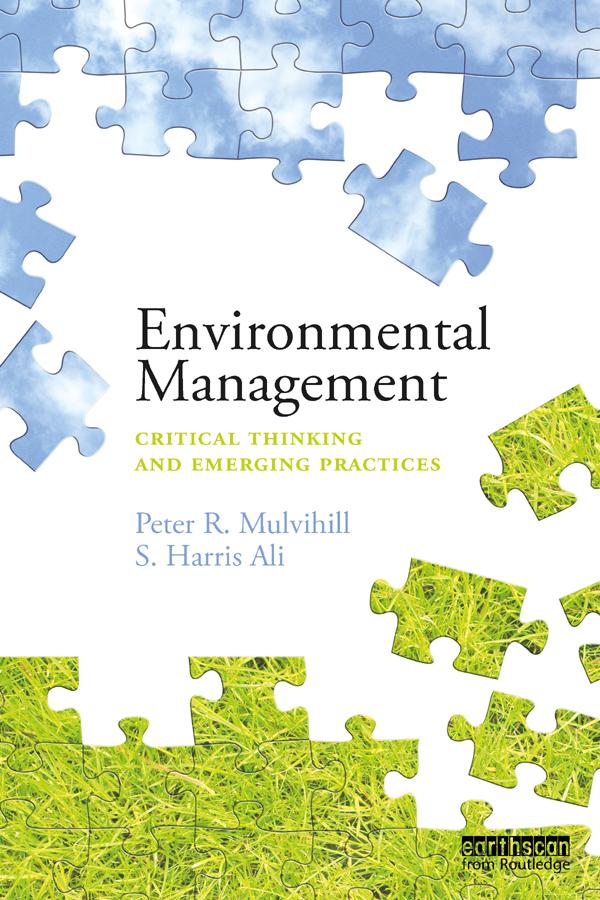
The field of Environmental Management (EM) involves a broad and evolving repertoire of practices. The field originated around 1970 in response to new policy, regulation and public concern about environmental issues. EM has undergone many changes and improvements since then, progressing from a reactive, compliance-based focus toward, in leading cases, practices reflecting strong commitment to sustainability. And yet, EM remains, for the most part, ill-equipped to deal with the complex and highly uncertain implications of the ecological crisis.
Environmental Management offers a rigorous critique of conventional EM and explores alternative ideas, frameworks and approaches that are currently considered "fringe", but which have the potential to transform the practice of EM. This book goes beyond narrow definitions and considers questions regarding the purpose, roles, scope and potential of environmental management. EM is situated and contextualized within the evolving and expanding realm of environment and sustainability literature. The book argues that new approaches to EM need to be more flexible, imaginative and better equipped to address future environmental problems of a scale and severity previously unforeseen.
This book will be of great interest to students and scholars of environmental management, environmental planning, resource management, and environmental assessment.
Betal nemt med kort, Klarna, Apple Pay eller Google Pay. Ikke tilfreds? Du har altid 14 dages fortrydelsesret. Læs mere i vores vilkår. Har du spørgsmål, så send os en mail på hello@memmo.org.
Memmo gør det nemmere at studere – uanset hvor du er i verden. Hos os samler du dine kursusbøger og smarte studieværktøjer ét sted: resuméer, quizzer, podcasts og flashcards. Og så er der Ted, din studieven, der svarer på alt, du undrer dig over. Over 50 000 studerende studerer allerede her – bygget til at hjælpe dig med at lære hurtigere og stresse mindre.