
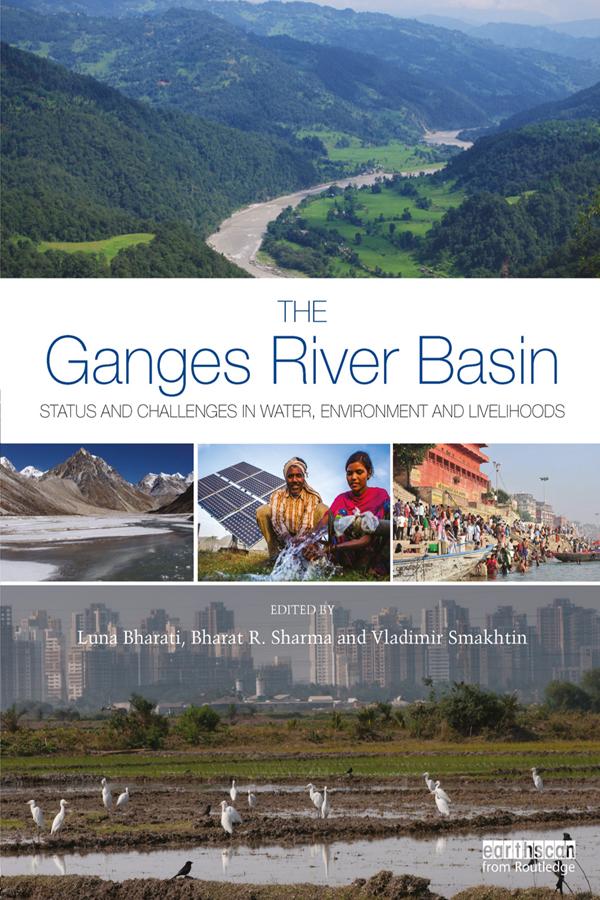
The Ganges is one of the most complex yet fascinating river systems in the world. The basin is characterized by a high degree of heterogeneity from climatic, hydrological, geomorphological, cultural, environmental and socio-economic perspectives. More than 500 million people are directly or indirectly dependent upon the Ganges River Basin, which spans China, Nepal, India and Bangladesh. While there are many books covering one aspect of the Ganges, ranging from hydrology to cultural significance, this book is unique in presenting a comprehensive inter-disciplinary overview of the key issues and challenges facing the region.
Contributors from the three main riparian nations assess the status and trends of water resources, including the Himalayas, groundwater, pollution, floods, drought and climate change. They describe livelihood systems in the basin, and the social, economic, geopolitical and institutional constraints, including transboundary disputes, to achieving productive, sustainable and equitable water access. Management of the main water-use sectors and their inter-linkages are reviewed, as well as the sustainability and trade-offs in conservation of natural systems and resource development such as for hydropower or agriculture.
Betal nemt med kort, Klarna, Apple Pay eller Google Pay. Ikke tilfreds? Du har altid 14 dages fortrydelsesret. Læs mere i vores vilkår. Har du spørgsmål, så send os en mail på hello@memmo.org.
Memmo gør det nemmere at studere – uanset hvor du er i verden. Hos os samler du dine kursusbøger og smarte studieværktøjer ét sted: resuméer, quizzer, podcasts og flashcards. Og så er der Ted, din studieven, der svarer på alt, du undrer dig over. Over 50 000 studerende studerer allerede her – bygget til at hjælpe dig med at lære hurtigere og stresse mindre.