
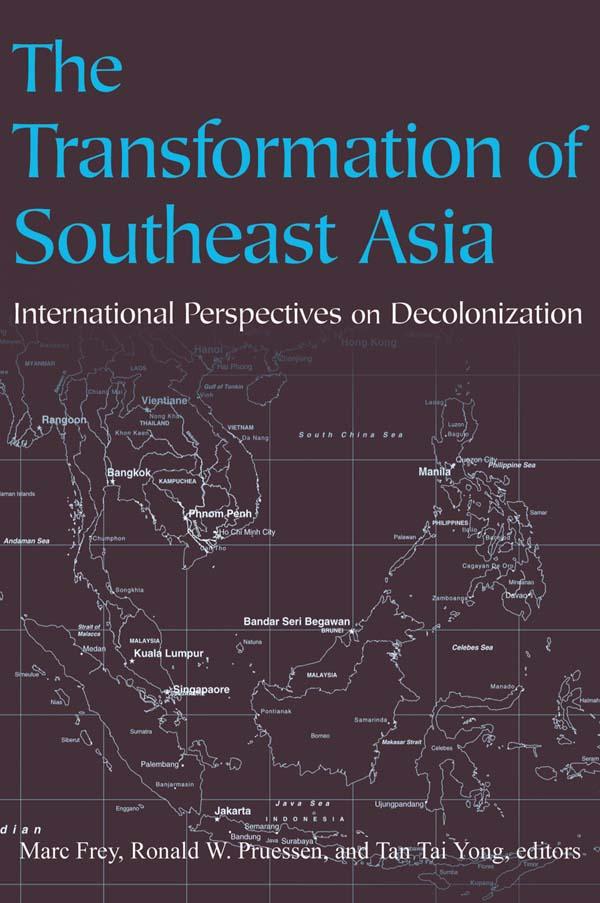
This book provides the basis for a reconceptualization of key features in Southeast Asia's history. Scholars from Europe, America, and Asia examine evolutionary patterns of Europe's and Japan's Southeast Asian empires from the late nineteenth century through World War II, and offer important insights into the specific events of the 1940s, 1950s, and 1960s. In turn, their different perspectives on the political, economic, and cultural currents of the "post-colonial" era - including Southeast Asia's gradual adjustment to globalizing forces - enhance understanding of the dynamics of the decolonization process. Drawing on new and wide-ranging research in international relations, economics, anthropology, and cultural studies, the book looks at the impact of decolonization and the struggle of the new nation-states with issues such as economic development, cultural development, nation-building, ideology, race, and modernization. The contributors also consider decolonization as a phenomenon within the larger international structure of the Cold War and the post-Cold War eras.
Betal nemt med kort, Klarna, Apple Pay eller Google Pay. Ikke tilfreds? Du har altid 14 dages fortrydelsesret. Læs mere i vores vilkår. Har du spørgsmål, så send os en mail på hello@memmo.org.
Memmo gør det nemmere at studere – uanset hvor du er i verden. Hos os samler du dine kursusbøger og smarte studieværktøjer ét sted: resuméer, quizzer, podcasts og flashcards. Og så er der Ted, din studieven, der svarer på alt, du undrer dig over. Over 50 000 studerende studerer allerede her – bygget til at hjælpe dig med at lære hurtigere og stresse mindre.
Du kan måske også lide
Køb bogen0