
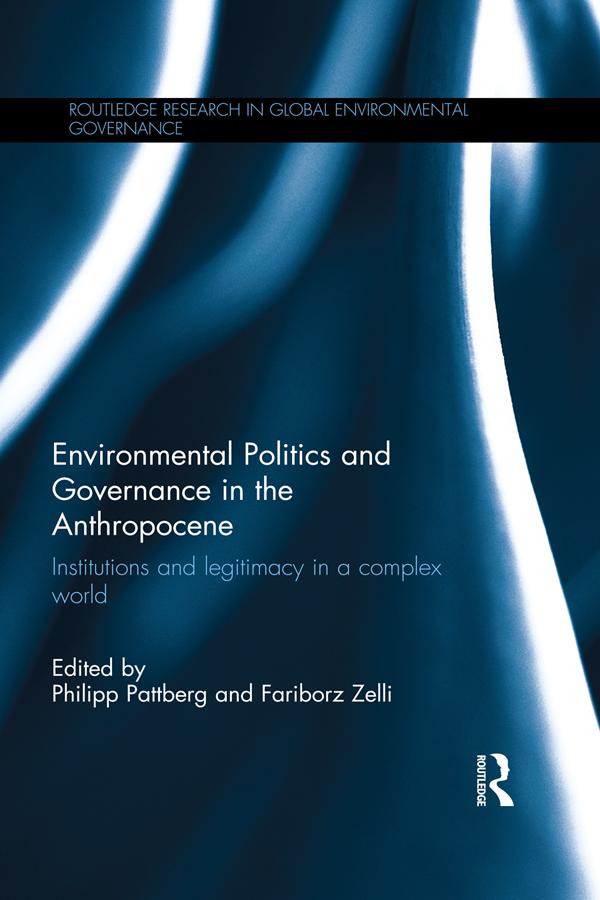
The term Anthropocene denotes a new geological epoch characterized by the unprecedented impact of human activities on the Earth’s ecosystems. While the natural sciences have advanced their understanding of the drivers and processes of global change considerably over the last two decades, the social sciences lag behind in addressing the fundamental challenge of governance and politics in the Anthropocene.
This book attempts to close this crucial research gap, in particular with regards to the following three overarching research themes: (i) the meaning, sense-making and contestations emerging around the concept of the Anthropocene related to the social sciences; (ii) the role and relevance of institutions, both formal and informal as well as international and transnational, for governing in the Anthropocene; and (iii) the role and relevance of accountability and other democratic principles for governing in the Anthropocene. Drawing together a range of key thinkers in the field, this volume provides one of the first authoritative assessments of global environmental politics and governance in the Anthropocene, reflecting on how the planetary scale crisis changes the ways in which humans respond to the challenge.
This volume will be of great interest to students and scholars of global environmental politics and governance, and sustainable development.
Betal nemt med kort, Klarna, Apple Pay eller Google Pay. Ikke tilfreds? Du har altid 14 dages fortrydelsesret. Læs mere i vores vilkår. Har du spørgsmål, så send os en mail på hello@memmo.org.
Memmo gør det nemmere at studere – uanset hvor du er i verden. Hos os samler du dine kursusbøger og smarte studieværktøjer ét sted: resuméer, quizzer, podcasts og flashcards. Og så er der Ted, din studieven, der svarer på alt, du undrer dig over. Over 50 000 studerende studerer allerede her – bygget til at hjælpe dig med at lære hurtigere og stresse mindre.