
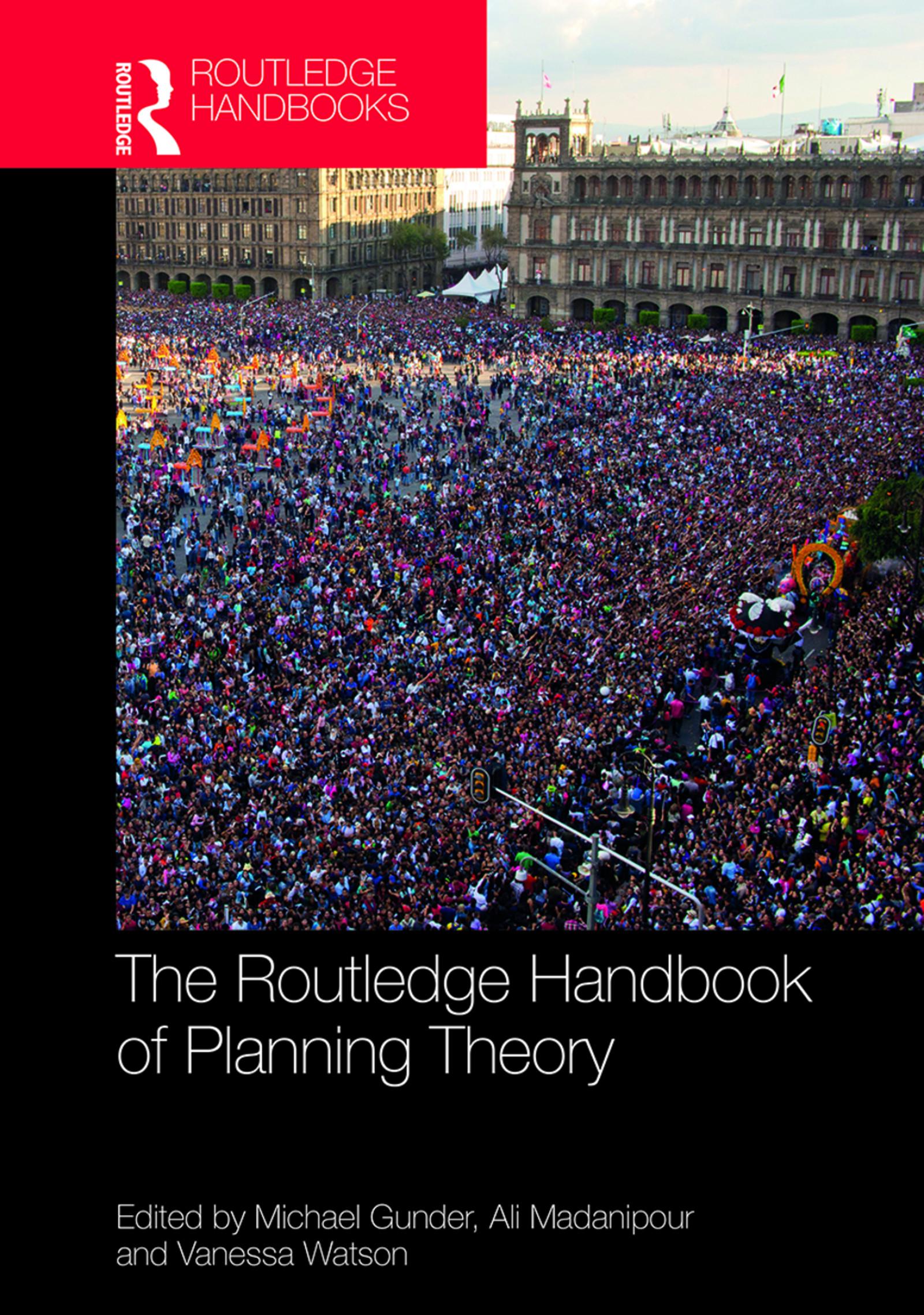
The Routledge Handbook of Planning Theory presents key contemporary themes in planning theory through the views of some of the most innovative thinkers in planning. They introduce and explore their own specialized areas of planning theory, to conceptualize their contemporary positions and to speculate how these positions are likely to evolve and change as new challenges emerge.
In a changing and often unpredictable globalized world, planning theory is core to understanding how planning and its practices both function and evolve. As illustrated in this book, planning and its many roles have changed profoundly over the recent decades; so have the theories, both critical and explanatory, about its practices, values and knowledges. In the context of these changes, and to contribute to the development of planning research, this handbook identifies and introduces the cutting edge, and the new emerging trajectories, of contemporary planning theory. The aim is to provide the reader with key insights into not just contemporary planning thought, but potential future directions of both planning theory and planning as a whole. This book is written for an international readership, and includes planning theories that address, or have emerged from, both the global North and parts of the world beyond.
Betal nemt med kort, Klarna, Apple Pay eller Google Pay. Ikke tilfreds? Du har altid 14 dages fortrydelsesret. Læs mere i vores vilkår. Har du spørgsmål, så send os en mail på hello@memmo.org.
Memmo gør det nemmere at studere – uanset hvor du er i verden. Hos os samler du dine kursusbøger og smarte studieværktøjer ét sted: resuméer, quizzer, podcasts og flashcards. Og så er der Ted, din studieven, der svarer på alt, du undrer dig over. Over 50 000 studerende studerer allerede her – bygget til at hjælpe dig med at lære hurtigere og stresse mindre.